 |
|
|
Play List: 4. Corinne 7. The Mormons 9. Lucy Brandon 10. Storm-Beaten 11. Lady Clare 13. Bachelors 14. Constance 15. Lottie 16. Agnes 17. Alone in London 18. Sophia 19. Fascination 20. The Blue Bells of Scotland 21. Partners 24. Angelina! 25. The Old Home 26. A Man’s Shadow 27. Theodora 29. Clarissa 30. Miss Tomboy 32. Sweet Nancy 33. The English Rose 36. Marmion 37. The Gifted Lady 38. The Trumpet Call 39. Squire Kate 40. The White Rose 42. The Black Domino 44. The Charlatan 45. Dick Sheridan 47. Lady Gladys 48. The Strange Adventures of Miss Brown 49. The Romance of the Shopwalker 52. Two Little Maids from School ___ |
|
|
|
ROBERT WILLIAMS BUCHANAN (1841 - 1901) |
|
|
|
|
|
|
|
|
|
7. When Knights Were Bold - The Films
When Knights Were Bold was filmed three times during the silent era and once as a ‘talkie’: 1. When Knights Were Bold (1916 - UK) 2. Il Cavaliere Del Silenzio (1916 - Italy) 3. When Knights Were Bold (1929 - UK) 4. When Knights Were Bold (1936 - UK) 5. A few shorts and a near-miss. ___
WHEN KNIGHTS WERE BOLD (1916 - UK)
The Bioscope (4 February, 1909 - p.25) Plays on the Screen. SIR,—Surely Mr. A. Johnson cannot be serious when he suggests that the presentation of popular theatrical successes on the screen would have a beneficial effect for those plays by advertising them. If he will turn to another page of your last issue he will see that a theatrical manager was told by the lessee of halls where he offered to present a sketch that it was no good “because the people have seen it on the film.” Would Mr. Johnson go to see “When Knights were Bold” and pay a shilling for the gallery if he could see the same things without words for threepence in a comfortable tip-up seat? I doubt it. ___
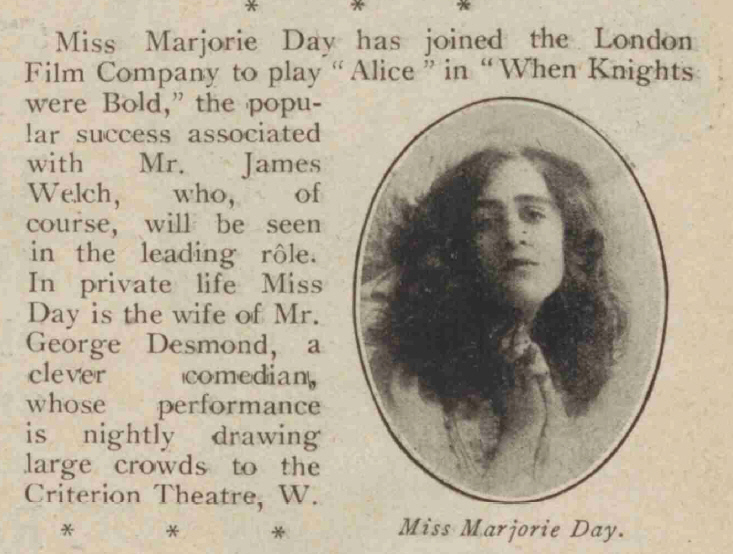
The Bioscope (11 May, 1916 - p.97) |
|
|
 |
|
|
|
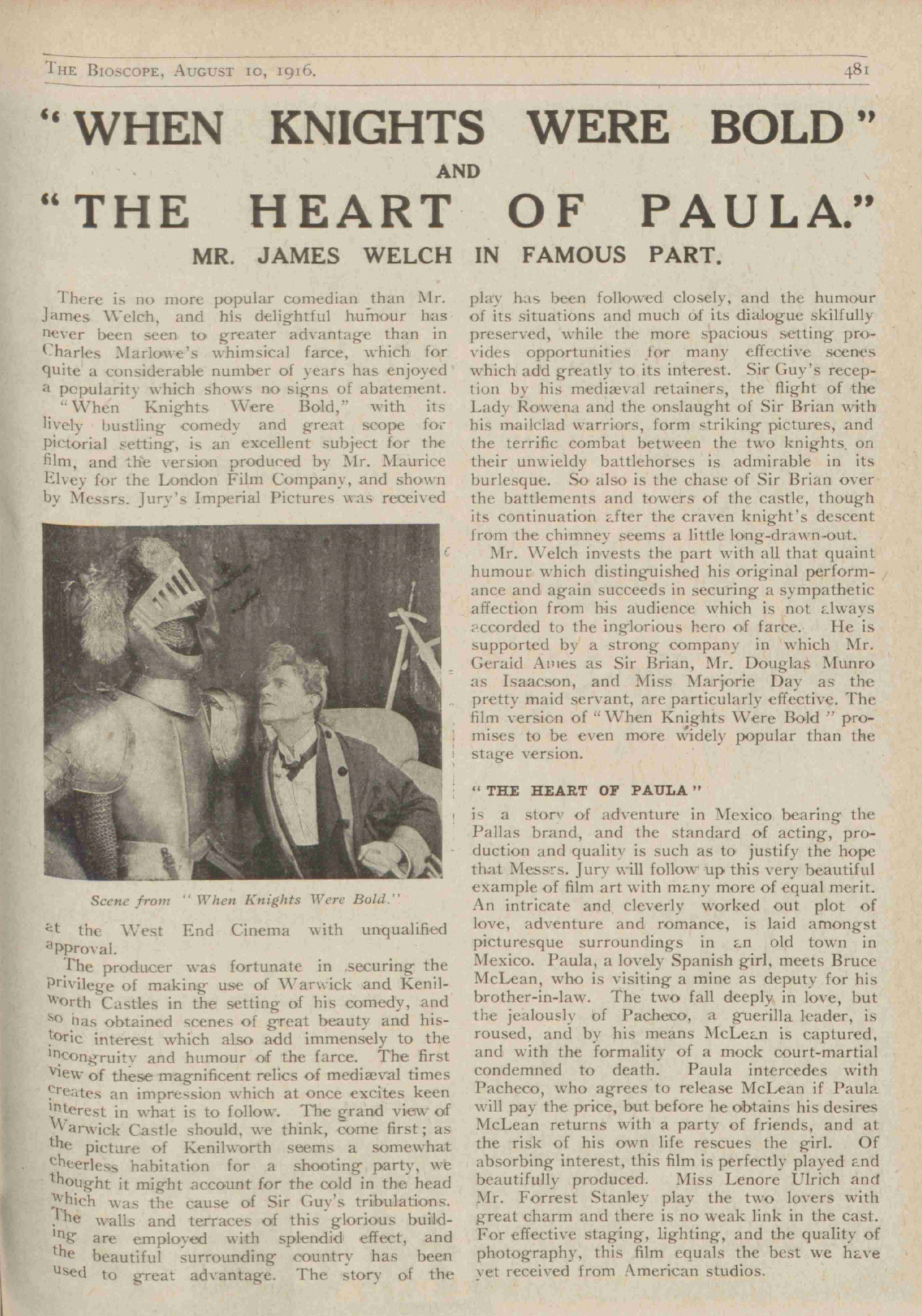
The Bioscope (10 August, 1916 - p.23) |
|
|
 |
|
|
|
|
|
|
|
|
|
|
|
|
|
|
|
|
|
|
|
|
|
|
|
|
|
|
|
|
|
|
|
|
|
|
|
(p.53) MUSIC IN THE CINEMA. TRADE SHOWS. “THE HEART OF PAULA” (PALLAS FILM) AND “WHEN KNIGHTS WERE BOLD” (LONDON FILM) I have often contended in these articles that as much “local colour” as possible should be introduced into the “musical accompaniment,” and I was a little surprised that Mons. Luna in his “accompaniment” to the first-named film did not introduce more. That the opportunity was there cannot be denied, as nearly the whole of the play takes place in Mexico and there were many situations where typical Mexican or Spanish music could have been appropriately used and it was not done. The “accompaniment” given to the picture was good, but in many places the “local colour” was missing. ___
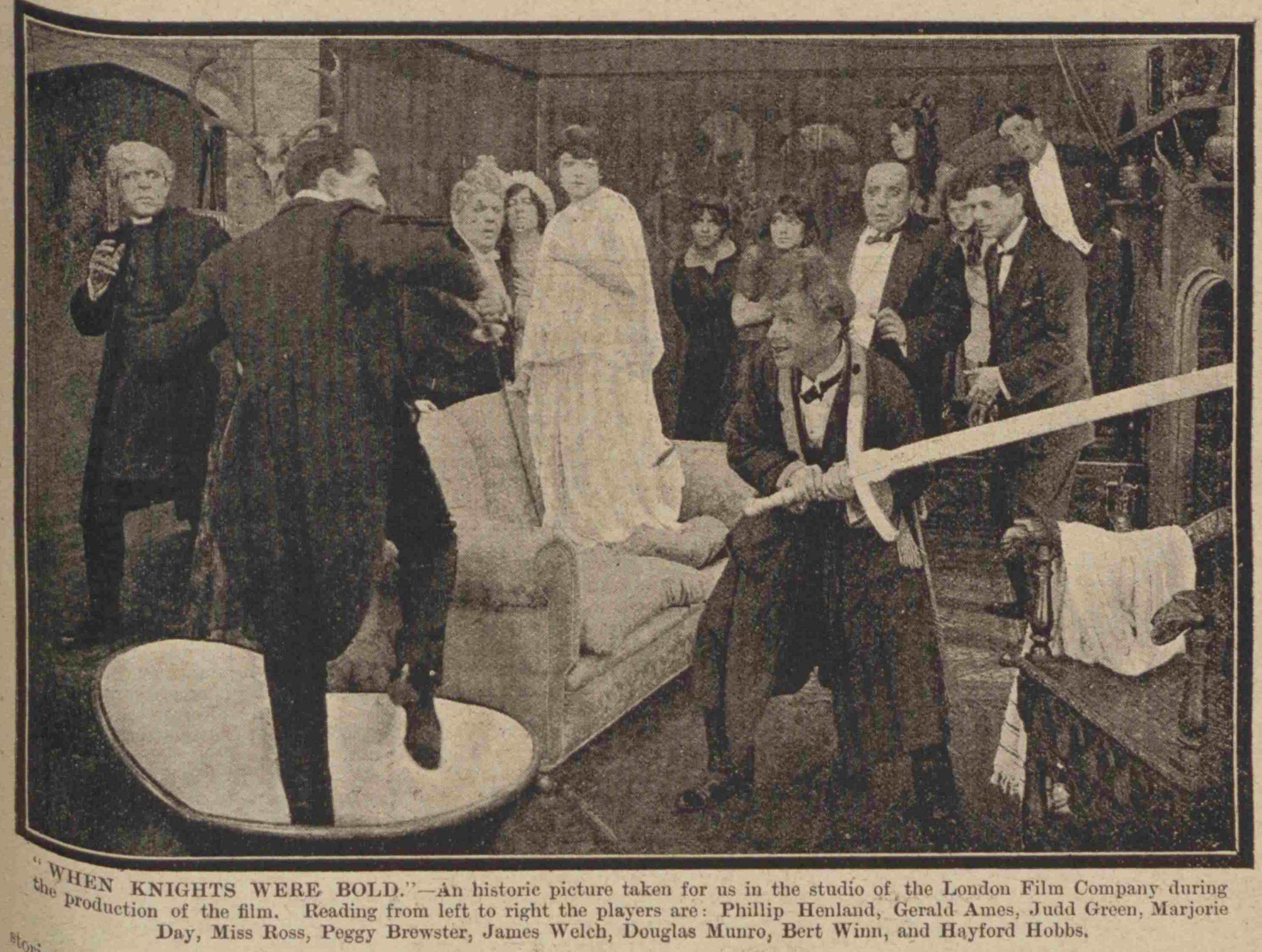
The Kinematograph And Lantern Weekly (7 September, 1916 - p.51) “WHEN KNIGHTS WERE BOLD” With “Jimmy” Welch in his Original Part THAT brilliant comedy, “When Knights Were Bold,” in which James Welch scored such a striking success, and which for so long kept huge audiences in continuous laughter, has been filmed by the London Film Company, with “Jimmie” in his original role, and we had an opportunity of viewing it one day last week at Jury’s, by whom it is being handled. The film version is exceptionally well done, and we should say that much care and thought has been spent upon it by Maurice Elvey, the producer, who has succeeded in obtaining the correct atmosphere. Settings and staging are alike excellent, and we believe we are correct in stating that many of the scenes were taken in and around Warwick Castle. It is a good picturization of a delightful play, and will undoubtedly be popular wherever it is shown. It perhaps loses a trifle through the absence of the spoken word, but this is inevitable, more particularly, perhaps, with comedy than with drama, but it will create roars of laughter, particularly the last two reels (there are four, by the way). Besides James Welch, the cast includes Gerald Ames, Douglas Munro, and Janet Ross, and the acting throughout is on a high plane, though as far as the opening of the springs of contagious laughter are concerned, it is “Jimmie” all the time. He is the champion fun-maker, and dominates the picture to a remarkable degree with his breezy personality. It might, in fact, despite the general excellence of the cast, be termed a one-man play. We cannot imagine anyone but Jimmie Welch undertaking the part of Sir Guy de Vere; he makes an excellent screen actor, and his many admirers will doubtless be delighted to renew their acquaintance with a play which has always been associated with his name, and which by his originality and humour he succeeded in making a household word. Romantic Heroine but Prosaic Hero. A Taste of the Good Old Times. It is impossible to give an adequate description of the endless comedy situations; they must be seen to be appreciated, and exhibitors who have not already done so should make a point of seeing this excellent British comedy. ___
Pictures And The Picturegoer (9 September, 1916 - pp.6-7) “Pictures” Interviews James Welch THE GREAT LITTLE COMEDIAN TELLS OF HIS FILM EXPERIENCES. |
|||||||||||||||||||||||||||||||||
 |
 |
||||||||||||||||||||||||||||||||
 |
|||||||||||||||||||||||||||||||||
|
The Kinematograph And Lantern Weekly (5 October, 1916 - p.6) During a recent air-raid scare in a certain Midland town, the patrons in the local kinemas were turned out about nine p.m., and a lively controversy took place in one of the local papers as to whether the management ought not to have given pass checks for another evening to those unlucky persons who had just come in. How the manager was to know “who was who,” and how he was to get round the tax difficulty was not explained. In the course of conversation with Mr. Howe, who controls Jury’s publicity department, a rather interesting point arose in regard to the question of entering a picture theatre when a picture was, say, half-way through. ___
The Birmingham Daily Mail (31 October, 1916 - p.5) Those who have seen James Welch in the farce “When Knights Were Bold” should not miss the film of this merry play and the droll comedian at the New Street Picture House, and those who have not seen the play should certainly make a point of seeing the film. Last night crowded audiences followed the quaint adventures of Sir Guy de Vere with the utmost amusement and entertainment, the interest being accentuated by the fact that the interior and exterior of Warwick Castle and the ruins of Kenilworth formed the background of the animated and highly diverting scenes. ___
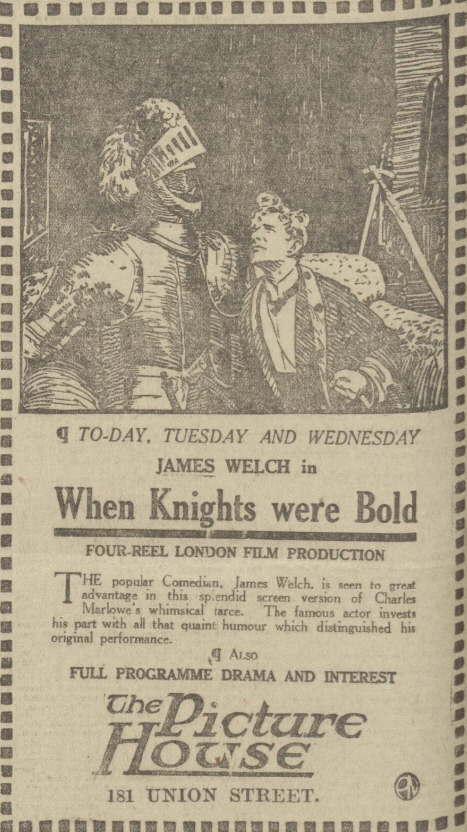
The Aberdeen Daily Journal (18 November, 1916 - p.3) THE PICTURE HOUSE. A four reel screen version of Charles Marlowe’s whimsical farce, entitled “When Knights were Bold,” with James Welch in his original part, has been produced by the London Film Company, and will be shown at the Picture House, 181 Union Street, on Monday, Tuesday, and Wednesday next. Sir Guy de Vere, last of a long line of de Veres, and owner of a romantic castle, is in love with the Lady Rowena, a romantic-minded lady, who rejects his suit because she wishes her husband to be a man in whom all the glories of the past still live, and Sir Guy is a very modern young man. Isaac Isaacson, a wealthy Jew, desires to secure Sir Guy as a husband for his daughter Sara, and bribes the hard up Sir Brian Ballymote to get him an introduction. The three are invited to Beechwood Castle, and to remove Rowena as a rival to Sara, Sir Brian makes love to her. Sir Guy, meanwhile, has been out shooting, and comes home with a dreadful cold, so when the guests go in to dinner, he is reclining with his feet in a mustard bath before a blazing fire in the hall. Presently he falls asleep and dreams of the good old times “when knights were bold.” Remembering his dream, and that his guests are still at dinner, he decides to give Lady Rowena her fill of “the good old time.” Sir Brian seeks refuge down a chimney, from which the surprised guests presently see a grimy and dishevelled figure appear. He is eventually kicked out, and Sir Guy gives up his little joke, and becomes engaged at last to Rowena, who now declares that she prefers the present day to “the good old times when knights were bold.” ___
The Aberdeen Evening Express (18 November, 1916 - p.2) “From Log Cabin to White House” runs the title of a well-known biographical work, and this phrase seems aptly to describe the transformation that takes place in the circumstances of Jimmie Welch, prince of comedians, in his film career. This week James is a hero—more or less—of the circus ring; next week we shall find him moving in the most aristocratic circles, amid scenes that have for a background those magnificent relics of mediæval times, Warwick and Kenilworth Castles. As Sir Guy de Vere in that brilliant farce “When Knights Were Bold,” Mr Welch adds another to his list of film successes. Funny as this diminutive knight, clad in shining armour, was on the stage, he is even funnier on the screen, where fuller scope is provided for his humorous antics. Supporting Mr Welch in the film version of the farce are Mr Gerald Ames as Sir Brian, Mr Douglas Munro as Isaacson, and Miss Marjorie Day as the pretty maid. As in all London Film productions setting and photography are excellent. “When Knights Were Bold” will be screened at the Picture House next week. ___
The Aberdeen Evening Express (20 November, 1916 - p.4) |
|||||||||||||||||||||||||||||||||
 |
|||||||||||||||||||||||||||||||||
|
The Tamworth Herald (17 February, 1917 - p.5) THE GRAND. The famous play, “When Knights were Bold,” was admirably screened at the Grand on Monday, Tuesday and Wednesday. The main features of this popular production have been carefully filmed, the hero James Welch being seen at his best. Other pictures of merit went to make up a first class entertainment. This week-end there is a capital five-part drama, “Sunshine Molly” (instead of “Me and Me Moke,” which is coming next month), and another instalment of the fascinating serial “Liberty.” _____
IL CAVALIERE DEL SILENZIO (1916 - Italy) _____
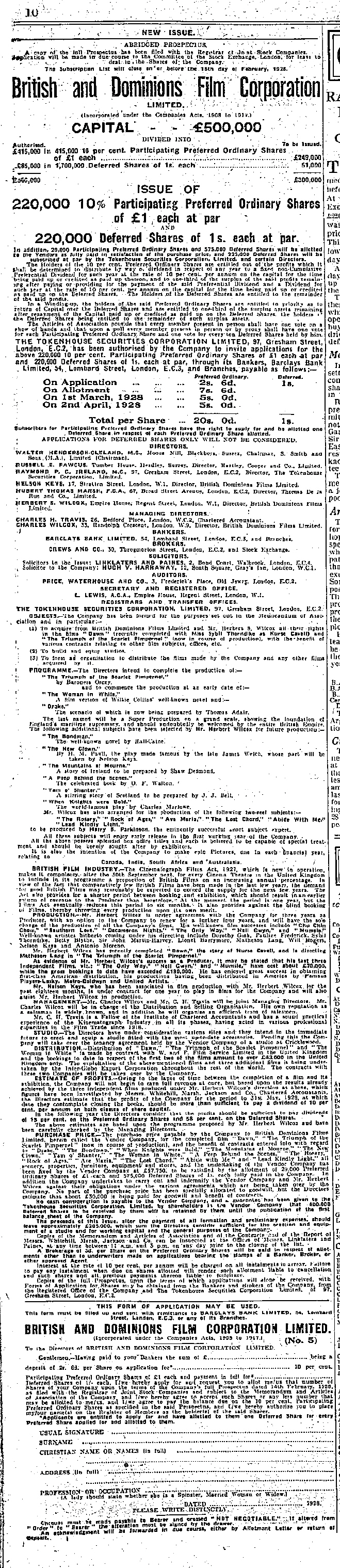
WHEN KNIGHTS WERE BOLD (1929 - UK) The British and Dominions Film Corporation was set up by Herbert Wilcox and an advert for the company appeared in The Daily Express on February 15th, 1928. Wilcox also went on to produce the 1936 musical version. |
|||||||||||||||||||||||||||||||||
 |
|||||||||||||||||||||||||||||||||
|
The Bioscope (29 August, 1928 - p.48) Tim Whelan Takes A Welsh Castle Tim Whelan has taken his “When Knights Were Bold” company to Caldicot, South Wales, where British and Dominions have been fortunate enough to obtain special permission to use the Castle exteriors. ___
The Picturegoer (1 November, 1928 - p.14) |
|||||||||||||||||||||||||||||||||
 |
|||||||||||||||||||||||||||||||||
|
The Bioscope (6 February, 1929 - pp.41-42) “When Knights Were Bold” Offered by: W. and F. Directed by: Tim Whelan Length: 7,213 feet. IN BRIEF: Clever adaptation of the comedy presented so successfully by the late James Welch, in which a nineteenth century baronet finds himself back in the middle ages. Amusing and well played comedy. ___
Sunday Pictorial (10 February, 1929 - p.19) Very Good Fun.—The film version of “When Knights Were Bold” is excellent entertainment. This famous stage farce has been very cleverly adapted, it has been produced on a lavish scale, it is smartly titled, and it is brilliantly acted. The fictional Beechwood Castle has been given such “local habitation” as to be one of the most effective settings yet seen in a British picture. [Note: “One would like to know just how many Russian pictures are now in this country, under whose authority they have been admitted, and why they are here. One would like to know whether any have been imported in private baggage.”] ___
The Stage (14 February, 1929 - p.3) “WHEN KNIGHTS WERE BOLD” Since its original production by the late James Welch, this farce has been continuously played in the provinces, and, until this year, was a permanent Christmas holiday attraction in London. The title and its reputation should alone assure success, but added to these valuable things is the fact that the producer, Tim Whelan, has turned out a thoroughly funny comedy. In adapting the play, Herbert Wilcox included everything we know it contains, and made full use of the many suggested incidents that are impossible for the stage. Nelson Keys gives a capital performance of Sir Guy, and is well supported by Martin Adeson, Eric Bransby Williams, Miriam Seegar, and many other first-class players. The settings are consistently good. _____ There is nothing new in the idea of midnight private screening for the trade and others interested, but it is to be hoped that the scheme will not become fashionable. The first of these stunts, we remember, was shortly after the war, when a very bad version, mostly sub-titles, of Brieux’s “Damaged Goods” was screened at midnight at the Shaftesbury Pavilion. The other night the Empire gave a midnight representation of “Show People,” and now the Regal is staging one of “White Shadows of the South Seas,” which is to be followed by an informal reception and dance. In addition we mig suggest that a fleet of delivery vans might be chartered for the conveyance home of those who do not possess cars of any sort. It is sure to rain or snow about four o’clock in the morning. ___
Britannia (22 February, 1929 - p.13) |
|||||||||||||||||||||||||||||||||
 |
|||||||||||||||||||||||||||||||||
|
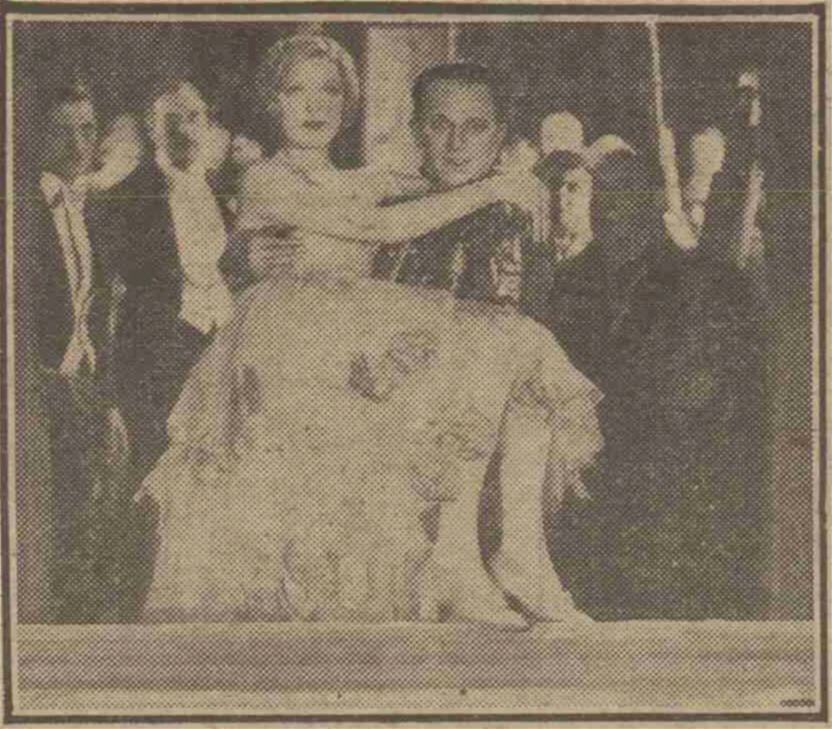
The Daily Mirror (5 April, 1929 - p.13) |
|||||||||||||||||||||||||||||||||
 |
|||||||||||||||||||||||||||||||||
|
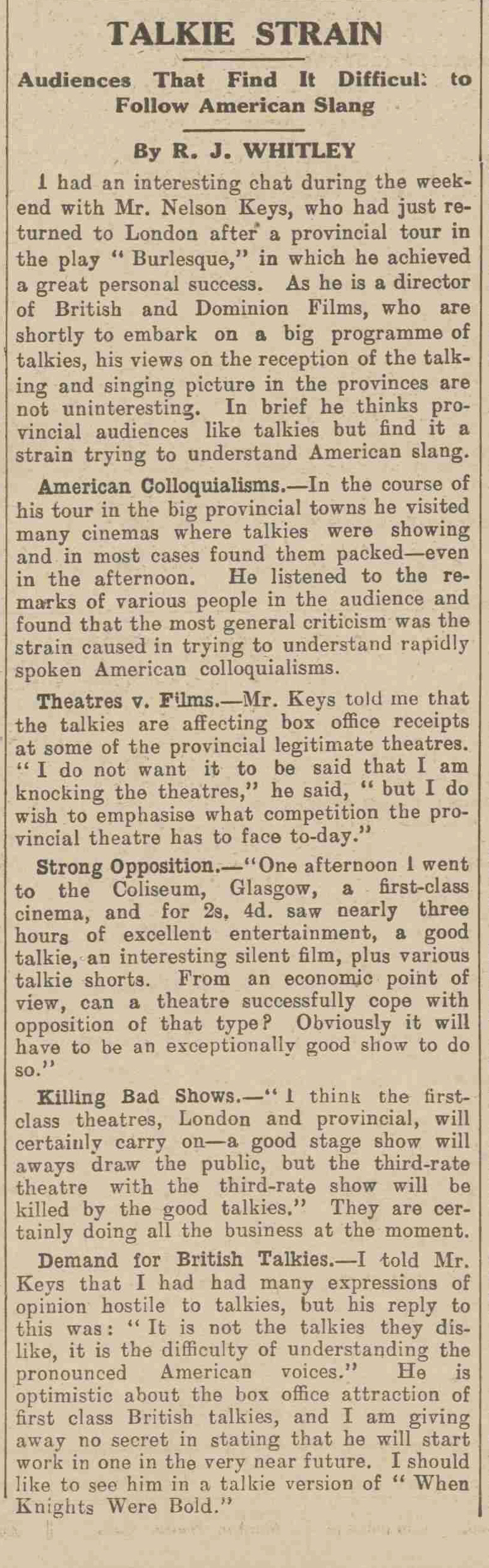
The Daily Mirror (3 June, 1929 - p.20) |
|||||||||||||||||||||||||||||||||
 |
|||||||||||||||||||||||||||||||||
|
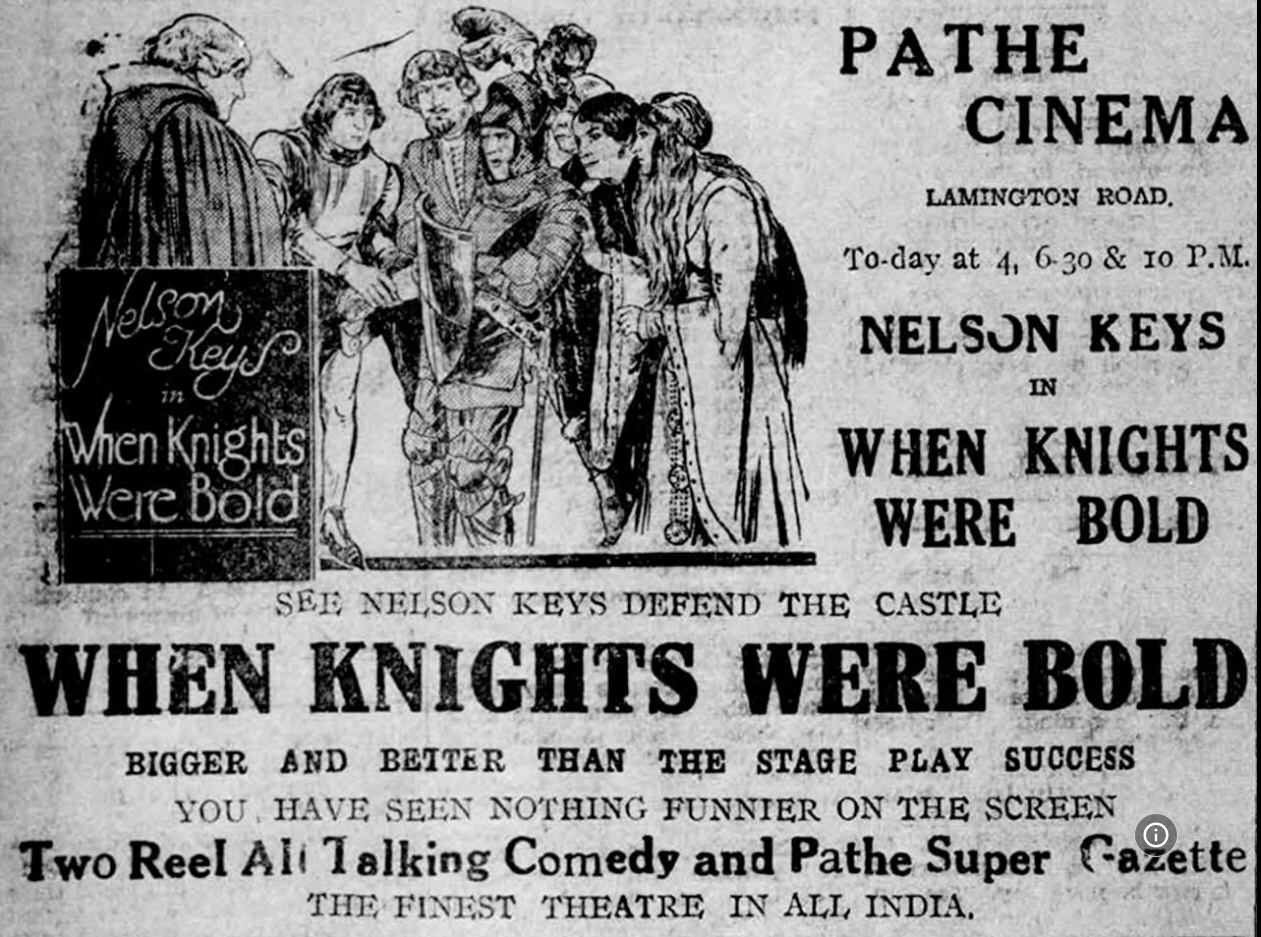
Perthshire Advertiser (7 December, 1929 - p.15) Round the Cinemas. CINERAMA. “When Knights Were Bold,” an established stage success for many years, has been made into one of the funniest films yet produced in England—a film that is funnier than the play. This rib-tickler is showing at the Cinerama on Monday, Tuesday, and Wednesday. Nelson Keys has never been more amusing, and his Guy de Vere remains a human being in spite of his farcical surroundings. There is a glorious mediaeval battle at the castle built for the purpose at Stanmore, where knights in armour and hundreds of men-at-arms storm the battlements. Nelson Keys is supported by Miriam Seegar, a pretty and clever actress, and Eric Bransby-Williams is the handsome and daring knight who defied de Vere in his ancestral halls. ___
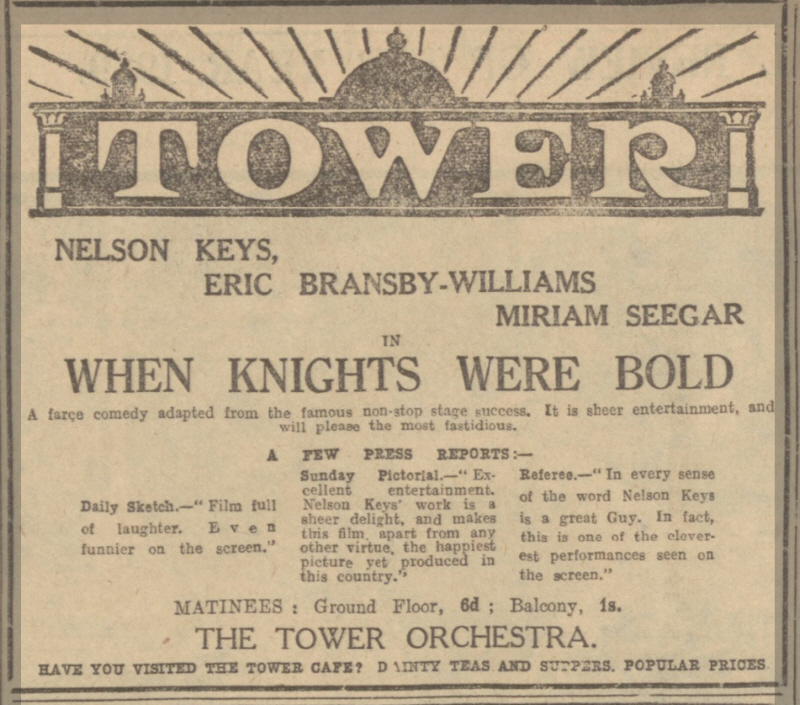
The Hull Daily Mail (30 December, 1929 - p.4) |
|||||||||||||||||||||||||||||||||
 |
|||||||||||||||||||||||||||||||||
|
Daily Express (30 December, 1929) |
|||||||||||||||||||||||||||||||||
 |
|||||||||||||||||||||||||||||||||
 |
|||||||||||||||||||||||||||||||||
|
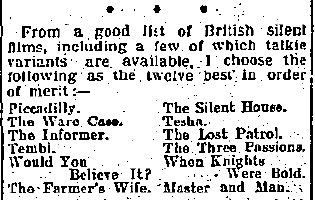
The Bioscope (8 January, 1930 - p.23) Victoria Films: British Successes The Paris trade shows of the six British films which are being distributed by Victoria Films (A. Graham-Maingot) have met with considerable success, and exhibitors affirm that these films show, with perhaps one exception, a considerable advance upon what has hitherto been sent over from England. “When Knights Were Bold” will probably be the greatest success in the cinemas, closely followed by “Would You Believe It?” “The Scarlet Pimpernel” and “The Bondman.” “High Treason” is admired, but even if it passes the Censor it will probably be difficult to exploit with success, excepting where “Metropolis” has previously pleased. Political arguments and problem plays have no strong appeal for French spectators. ___
Burnley Express and Advertiser (11 January, 1930 - p.5) NEW SUCCESS AT THE GRAND. Everyone who has seen that uproarious comedy, “When Knights were Bold,” will want to see the film version, which has just been released, and which will be at the Grand next week. Many London critics have acclaimed it as one of the few films funnier than the original play, and all are agreed that it is clever and amusing entertainment. Nelson Keys is a comedian who has won fame on both sides of the Atlantic, and his performance in this picture is really brilliant. For the benefit of younger patrons who have not seen the play, it will perhaps be as well to give an outline of the story. It concerns a young and rich nobleman, whose only trouble is his relations. He is glad that he comes of an ancient and glorious line, and he is pleased to succeed to the baronetcy; but he is glum when he thinks of his relatives. Any bright young fellow would be depressed with such a set of relations, though Lady Rowena, a very distant relation, helps him to avoid becoming morbid. Needless to say, Lady Rowena is young and charming. The young Sir Guy dreams a dream. He is taken back into the good old days when knights were bold, and in true knightly fashion, overcomes his enemies to save his “faire ladye.” The dream has a startling effect on his subsequent conduct, and the film ends in most delightful fashion. Mr. Keys has been given admirable support from a well-chosen cast, and the settings throughout are elaborate and effective. We can be justly proud of this as a British picture. ___
The Dundee Courier (14 January, 1930 - p.9) THE KING’S. “Broadway Babies,” a film dealing with theatrical life and happenings behind the scenes, heads the programme of the King’s Theatre. ___
Western Daily Press (25 February, 1930 - p.3) Premier. “When Knights Were Bold” was an undoubted success on the stage, but as a film it is almost overpowering in its farcical humour. It is the chief item at the Premier Picture House on Tuesday and Wednesday. nelson Keys, who plays the chief role, has never been more amusing. There is in the film, which is wonderfully photographed, a glorious mediæval battle at the castle built specially for that purpose at Stanmore, where knight in armour and hundreds of men-at-arms storm the battlements. Nelson Keys is supported by Mirian Seegar, a pretty and clever actress, and Eric Bransby-Williams. A fine drama, “The Silent Sentinel,” is the other attraction. During the latter half of the week Matheson Lang leads an accomplished cast in “The Blue Peter,” and Jack Mulhall plays with typical abandon in “Actress and Angel.” ___
The Picturegoer (1 February, 1931 - p.35) |
|||||||||||||||||||||||||||||||||
 |
|||||||||||||||||||||||||||||||||
|
The Bioscope (24 June, 1931 - p.18) |
|||||||||||||||||||||||||||||||||
 |
|||||||||||||||||||||||||||||||||
|
|
 |
|
|
|
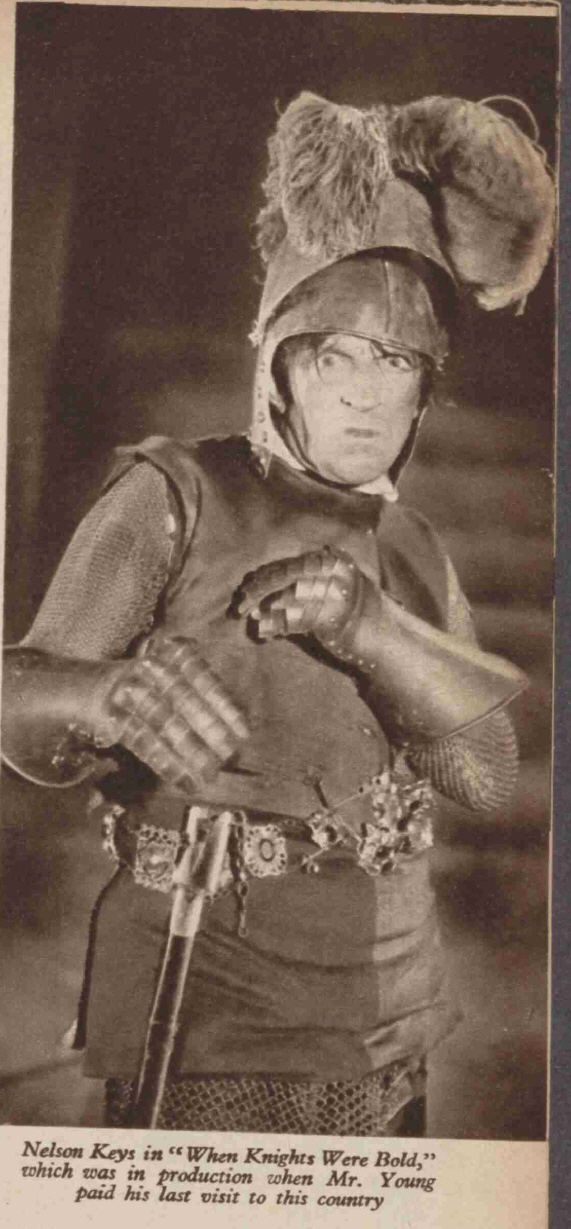
Picturegoer Weekly (20 October, 1934 - p.11) [This photo of Nelson Keys is taken from an article about the film editor Harold Young, ‘The Man Who “Cuts” The Stars’ |
|
|
 |
|
|
|
This photo of Nelson Keys is taken from an article about the film editor Harold Young, ‘The Man Who “Cuts” The Stars’, which is available here: Page 10 , Page 11.] ___
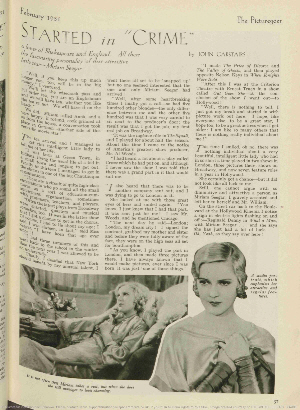
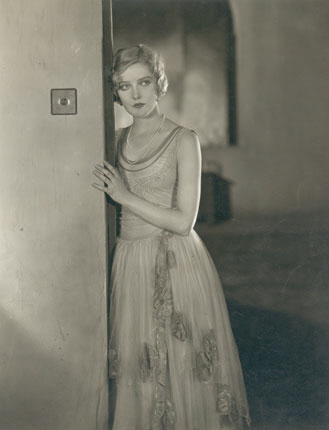
Miriam Seegar, who played Lady Rowena in the 1929 film of When Knights Were Bold, died on 2nd January, 2011 at the age of 103. There is an obituary on The Telegraph site and an interview with the actress includes the following information about When Knights Were Bold: “... After high school, when I was 18, I went to London where I acted in an American play, ‘Crime’ (‘28), that was running over there.” On the It’s not just Michael Powell site, this photo carries the description, ‘Miriam Seegar in When Knights Were Bold’ but no further information is given. |
|
|
 |
|
|
|
When Knights Were Bold - The Films continued or back to When Knights Were Bold main menu
|
|
|
|
|
|
|