|
|
 |
|
|
ROBERT WILLIAMS BUCHANAN (1841 - 1901)
|
|
|
|
THEATRE REVIEWS
33. The English Rose (1890)
The English Rose
by Robert Buchanan and George R. Sims.
London: Adelphi Theatre. 2 August, 1890 to 2 May, 1891 (238th performance).
Boston: Boston Museum. 1 September, 1890.
Liverpool: Court Theatre. 29 September, 1890. First provincial performance.
New York: Proctor’s Theatre. 9 March, 1892.
Other performances:
London: Elephant and Castle Theatre. 18 July, 1898.
London: The Pavilion Theatre. 24 April, 1899.
A series of letters from John Coleman and Robert Buchanan appeared in The Era in August 1890, concerning the original source of The English Rose.
Film: The English Rose, directed by Fred Paul, 1920 (more information in the Robert Buchanan Filmography section).
|
|
|
|
|
|
|
|
 |
|
|
|
 |
|
|
|
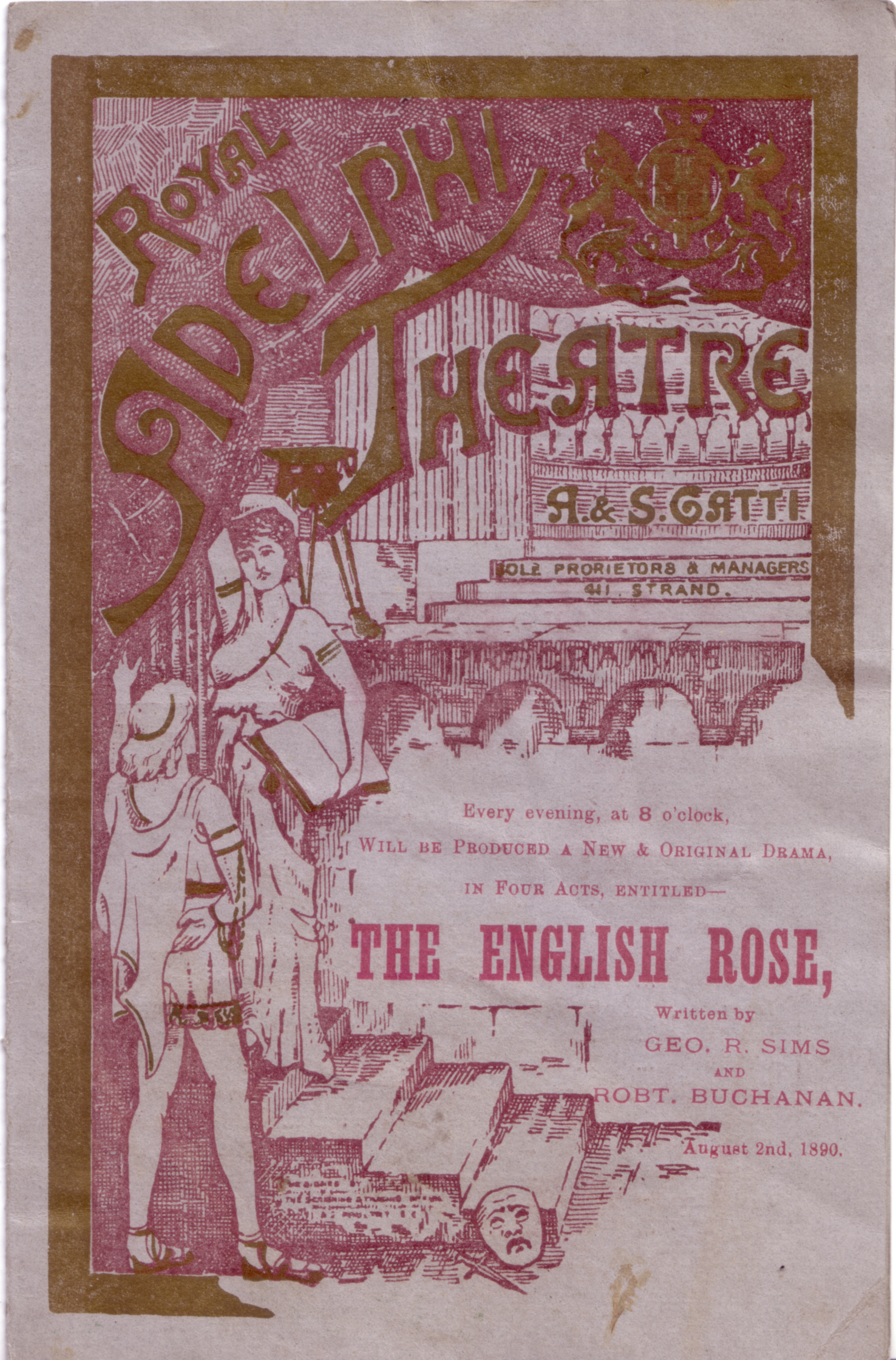
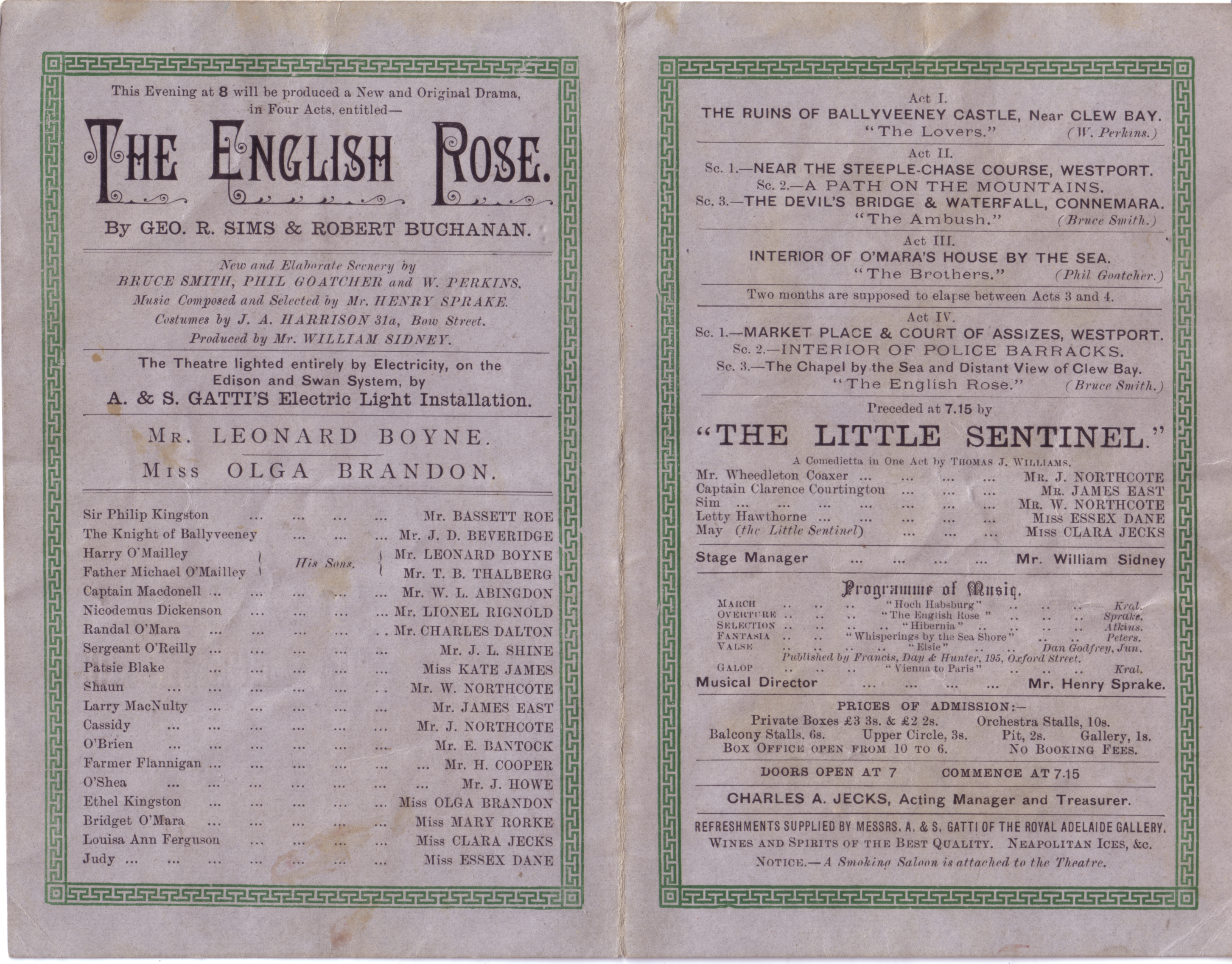
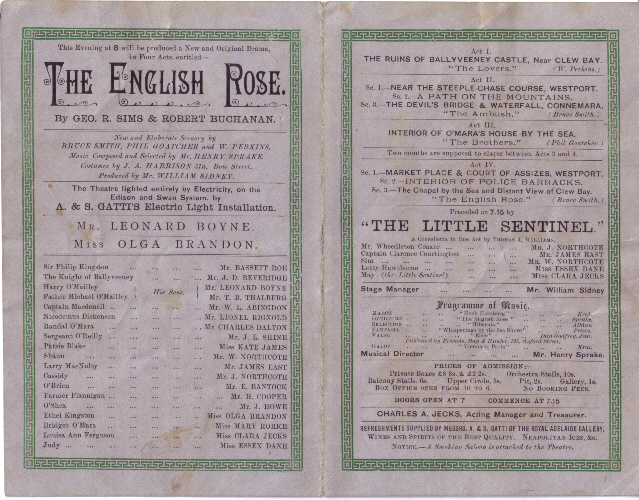
[Programme for The English Rose at the Adelphi Theatre, 2 August, 1890.
Click the pictures for larger image.]
The Era (1 March, 1890 - p.10)
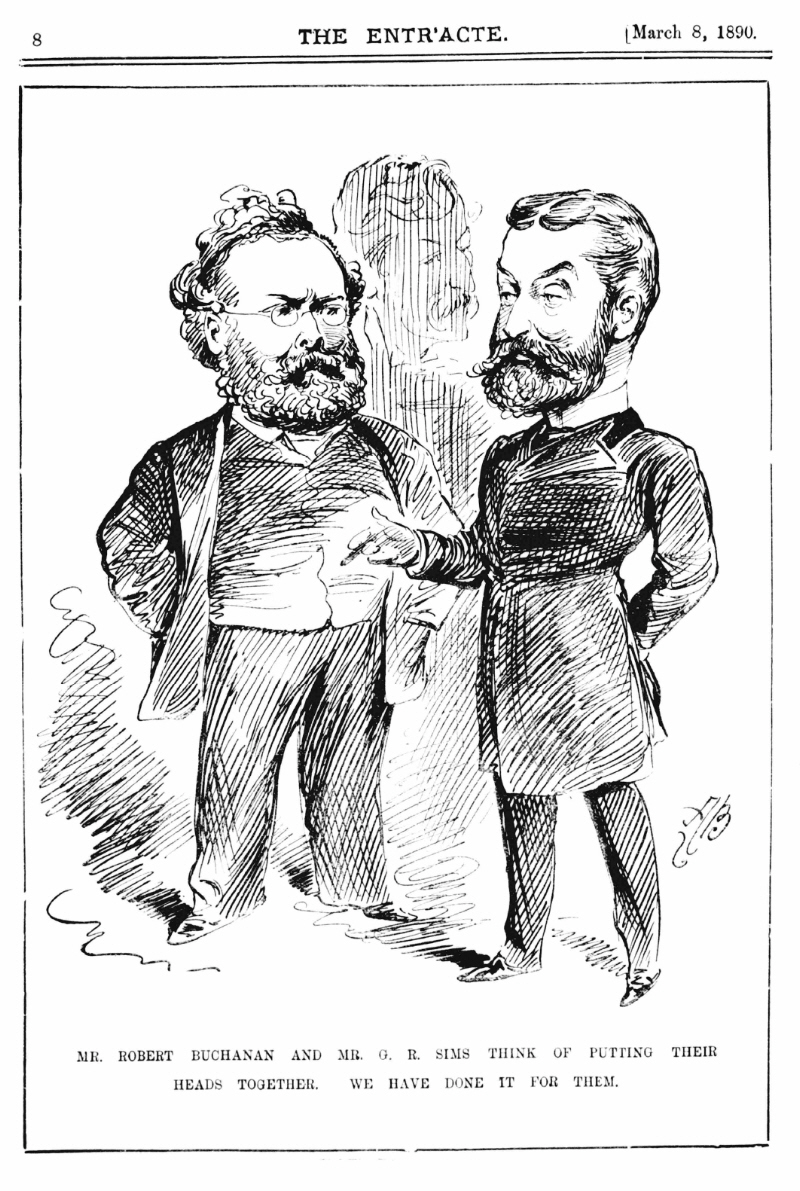
MR G. R. SIMS and MR ROBERT BUCHANAN will be the joint authors of the new drama which is to follow London Day by Day at the Adelphi Theatre.
___
The Entr’acte (8 March, 1890 - p.8)
|
|
|
|
 |
|
|
|
The Referee (18 May, 1890 - p.3)
The new melodrama by G. R. Sims and Robert Buchanan at the Adelphi will be in four acts, and will deal with modern Irish life. Mr. Leonard Boyne, Miss Olga Brandon, and Mr. Charles Dalton are the newcomers. The drama will be produced on August 2, the Saturday before Bank Holiday.
___
The Stage (11 July, 1890 - p.9)
In speaking of Buchanan and Sims’s new Irish drama to be produced at the Adelphi on Saturday, August 2, “R. U. E.” in the Pall Mall Gazette says:—“The hero will be played by Mr. Leonard Boyne, who should be suited to perfection in a breezy Hibernian rôle; while Miss Olga Brandon, who will be compelled to give up her nightly fast at the Shaftesbury, will appear as the English heroine. Among the other artists who will join the Adelphi company for the new piece will be Mr. Bassett Roe, Mr. Charles Dalton, and Mr. Thalberg. Mr. Bassett Roe will be a gentlemanly specimen of the landlord class; Mr. Charles Dalton a rough son of the soil, a character conceived somewhat in the style of Danny Mann in The Colleen Bawn; and Mr. Thalberg—an actor to whom Mr. Buchanan has already entrusted such important parts as Lovelace in Clarissa and Eros in The Bride of Love—an ardent young priest, who has flown to the arms of the Church as a refuge from an unconquerable and hopeless passion. Mr. W. L. Abingdon will appear as the out-and-out villain of the drama, but Mr. J. D. Beveridge for once in a way will enact a fairly exemplary member of society. The lighter moments of the story will be in the hands of those well-tried Adelphi favourites, Messrs. J. L. Shine and Lionel Rignold, the former of whom should make much of the humours of a rollicking Irish policeman. Miss Mary Rorke, Miss Kate James, and Miss Clara Jecks will also have parts in a cast which, by reason of its strength, promises well for the success of the Brothers Gatti’s autumn venture.”
___
The Daily Telegraph (11 July, 1890 - p.3)
DRAMATIC AND MUSICAL.
In the new Irish drama by George R. Sims and Robert Buchanan, now in active rehearsal at the Adelphi—and due, if all be well, on Aug.2—the authors have been particularly careful to avoid all controversial political matter, and their aim is to tell a simple story of human life; but if there is any bias to be found in the new play it will be in generous sympathy for the Irish people. Of what value would be an Adelphi Irish drama without it? An attempt will be made by the authors to show the Irish priest as he really is. In one scene, bearing at the outset a strong resemblance to a passage in the Haymarket “Village Priest,” the earnest young pastor tells of the hopeless passion which made him devote his life to religion; but instead of avowing, with the French abbé, that this passion still possesses him, he describes his victory over it, and his consequent purification. The question thus alluded to is, however, only a side issue in the new drama, the real hero of which is a gay, light-hearted young Irishman, played by Mr. Leonard Boyne, who should understand the Irish character.
___
The Graphic (19 July, 1890)
In the new drama of Messrs. Sims and Buchanan, which is to be brought out at the ADELPHI, there is, it is said, a priest who will relate how a hopeless passion induced him to devote his life to religion. At present the latest example of this familiar stage figure is the Abbé Dubois at the Haymarket. The type seems to be traceable, through a now rather long succession, to Lamartine’s once popular Jocelyn.
___
The Daily Telegraph (25 July, 1890 - p.3)
It was originally proposed to call the new Adelphi play “The English Rose,” and it is not at all certain that this charming title will be discarded for one of a more sporting character. Already there are rumours of “priority of claim” in connection with the plot and incidents of the new Irish drama, but when in the history of the stage did not this occur? According to some disappointed and unplayed authors, “there is nothing new under the sun” except their own plots, but it is not at all likely that either Mr. George R. Sims or Mr. Robert Buchanan would affix their affidavits to the words “new and original” if this were not the case. At any rate, whatever existing work may be dimly suggested by the new drama, we may be quite certain that the treatment is fresh and unconventional. Saturday night, Aug. 2, is fixed for the new Adelphi play, and after that the season will be at an end, and the dramatic critics will be off for their holiday far away from the temptation of first nights or matinées.
___
The Penny Illustrated Paper (2 August, 1890 - p.3)
“The English Rose,” the new melodrama Mr. G. R. Sims and Mr. Robert Buchanan have written for Messrs. Gatti, is the first important novelty of the early autumn in London. It is due at the Adelphi to-night. A little bird has whispered to me that “The English Rose” is as sweet as its fragrant namesake, and that it is likely to bloom for many a night to come in the bright and comfortable and well-ventilated and coolly lit theatre which MM. Gatti manage so successfully, with Mr. Sidney as the able stage-director. This “English Rose” is a winsome English gentlewoman, resident in Ireland, who wins th heart of the Irish hero. Miss Olga Brandon is the “English Rose.” I’m told there’s a splendid character in an Irish priest. Plot is exciting and sympathetic. Trust those Past Masters in the Art of Love (theatrical love, of course), MM. Sims and Buchanan, to supply plenty of love-making of the right sort for Adelphi audiences, bedad! Rely upon plenty of strong acting on the part of Mr. Leonard Boyne (who should try to be as natural as he can), Miss Mary Rorke, and Mr. Beveridge; and depend upon it, Mr. J. L. Shine (half an Irishman by birth), Mr. Lionel Rignold, Miss Clara Jecks, Mr. James East, and Miss Kate James will supply an abundance of humour, and good humour.
___
Reynolds’s Newspaper (3 August, 1890)
ADELPHI THEATRE.
It goes without saying that a piece by two such masters of stage craft as Mr. G. R. Sims and Mr. Robert Buchanan would present a series of bright, animated, and effective pictures. “The English Rose,” produced at the Adelphi Theatre last night, is an Irish play, through, from its title, one would hardly suspect the fact. The authors have adopted the bold experiment of presenting a play of modern Irish life, which is told with a fidelity we miss in the Irish plays of Mr. Boucicault, without losing any of the picturesque characteristics of that author. The curtain opens on a scene representing the ruins of Ballyveeney Castle, near Clew Bay, on the West Coast of Ireland. The Knight of Ballyveeney has been dispossessed of his property, which has come into the hands of Sir Philip Kingston, an Englishman. His niece, Ethel Kingston—the “English Rose,” as she is called—is in love with Harry O’Mailley, a son of the Knight. Sir Philip Kingston’s land agent, one Captain Macdonell, is, of course, the villain of the piece. He grinds the tenants, while pretending to be their friend, falsely laying the blame upon the landlord. This man is also in love with the landlord’s niece. Prompted to make inquiries as to his agent’s accounts, the latter, who has been guilty of falsification and appropriation, incites some discontented tenantry to murder Sir Philip. Harry O’Mailley, hearing of the plot, rides from the racecourse, where he had won a steeplechase against the agent, to save his father’s dispossessor. He comes too late; the murder has just been accomplished. He struggles with one of the assassins, who escapes, leaving his gun in Philip’s hands. Miss Kingston, who was on the car when the murder was committed, returns, and discovers her lover in a situation which leads her to believe that he was guilty of the murder, of which she accuses him in the presence of witnesses, but, in a few moments, withdraws the accusation. In these incidents, as may well be imagined, there is ample scope for the Adelphi management to produce striking stage effects. And they make the most of them. The scenery is all that stage carpentry and painting can effect. The spot chosen for the murder represented an old bridge, beneath which a volume of water poured. The full moon illuminated the scene, and the Connemara mountains rose in the blue haze of the background. The murder itself is an exciting piece of stage business. An Irish jaunting car drives across the stage. Several shots are fired on both sides, and presently in comes thundering the belated rescuer. Harry O’Mailley is, of course, arrested and charged with the murder. The interest is here intensified by the fact that his brother, who is a priest, has received the confession of the real culprit, which the Church forbids him to reveal. We have here a repetition of the incident which has been used with such effect in “The Village Priest.” However, in the end, it all comes right. O’Mailley is found guilty of the murder, but he is rescued by the people. Meanwhile one of the accomplices of Captain Macdonell turns Queen’s evidence, and the real murderer confesses. The lovers are thus restored to one another amid general rejoicing, and the handcuffs are clapped on Macdonell. The last scene, representing a land and coast scene on the West Coast of Ireland, is one of surpassing beauty. Mr. Leonard Boyne, as Harry O’Mailley, acted with great spirit. His bearing was entirely what one would expect from an Irish gentleman of the Celtic strain—full of animal spirits, good humour; hot in taking offence, honourable in reparation. He had a most difficult task, as he was on the stage nearly the whole time, and his physical exertions in managing a high-spirited steed were by no means inconsiderable. Miss Olga Brandon, as the “English Rose,” acted with grace and carefulness, but the part did not allow much scope for the exhibition of her undoubted histrionic abilities. Miss Mary Rorke and Miss Clara Jecks were similarly provided with parts which gave them little opportunity to shine. Nothing better in the way of low comedy acting has been seen recently than Mr. Lionel Rignold’s Nicodemus Dickenson, a London betting man, who has been obliged to seek refuge in Ireland for a forgery. Mr. J. L. Shine’s Sergeant O’Reilly, of the Royal Irish Constabulary, was also an extremely good piece of comic acting. Mr. J. D. Beveridge’s Knight of Ballyveeney gave a picture of dignified, yet hearty and refreshing manhood, much appreciated by the audience. Indeed the front of the house was vociferously appreciative throughout. The actors were called before the curtain at the end of each act, and, when the curtain fell, Messrs. Sims and Buchanan, in response to repeated calls, bowed their acknowledgments from the stage.
___
Lloyd’s Weekly Newspaper (3 August, 1890)
LAST NIGHT’S THEATRICALS.
_____
ADELPHI.
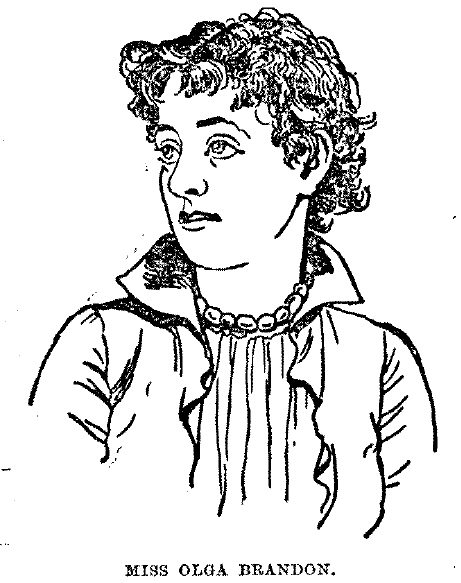
The new piece, The English Rose, possesses all the essentials of an Adelphi drama. Steering clear of debateable matter, Messrs. Sims and Buchanan have succeeded in constructing a story which sufficiently bears the impress of reality as concerns the disturbed state of Ireland a few years ago. and at the same time is thoroughly vigorous in tone. There is abundant variety, too, in the characterisation, and in the romantic nature of the incidents. No wonder, then, that early in the action the audience showed that they were disposed to give a cordial greeting to the Messrs. Gatti’s latest venture. Harry O’Mailley, a son of an impoverished Irish gentleman, the knight of Ballyveeney, is in love with Ethel Kingston, the ward of Sir Philip Kingston, the English owner of the estates formerly owned by the knight. Ethel is also sought by Captain Macdonell, the universally hated agent of Sir Philip. Macdonell, besides acting the part of the “false steward,” is the instigator of threatening letters to Sir Philip, his idea being that he, by playing upon the latter’s fears, may obtain a freer hand to oppress the peasantry. The foundation of the piece is virtually the hatred of Macdonell towards the gallant and honest Harry O’Mailley, as good a sample of the frank, insinuating, young stage Irishman as ever was drawn, even by Boucicault.
|
|
|
|
 |
|
|
|
The humour of the piece, which is a highly-successful element of the performance, is also in spirit reminiscent of the typical Irish drama of The Colleen Bawn, Arrah-na-Pogue, and The Shaughraun pattern, which is equivalent to very high praise. The comic characters in the present case are a Cockney horse-dealer (embodied with graphic force by Mr. Lionel Rignold), a serjeant of Irish constabulary (Mr. J. L. Shine), and an English servant girl (represented by Miss Clara Jecks with her wonted brightness and engaging piquancy). Macdonell, ordered to produce his accounts, induces a discontented young farmer to assassinate Sir Philip as he is returning from a race. This race, by the way, is won by Harry, after a vain attempt has been made to hocuss his horse, and being struck by Sir Philip, and subsequently found bending over the latter’s body after the assassins have escaped, the young Irishman is accused of the crime. Harry is found guilty of the murder, but on being taken from the prison is rescued by the mob. Macdonell’s schemes are at length exposed by one of his associates turning Queen’s evidence, and the real murderer also confesses. The intentions of the authors appear to be fully carried out by the performers. The selection of Miss Olga Brandon for the heroine was judicious, inasmuch as Ethel Kingston is a part requiring graceful presence together with considerable feeling. A scene demanding forcible expression is that in which the girl, after accusing her lover of the murder, attempts to withdraw the charge, and here Miss Olga Brandon notably acted with admirable decision. Miss Mary Rorke effectively indicates the secret love of the murderer’s sister for Harry O'Mailley. The hero is played with refreshing vigour and earnestness by Mr. Leonard Boyne; the old knight is sturdily represented by Mr. Beveridge, Miss Kate James acts with sprightliness as an Irish stable-boy; Mr. T. B. Thalberg is dignified as the clerical brother of Harry; Mr. Bassett Roe is Sir Philip; Mr. W. L. Abingdon has a familiar task in delineating the villainy of Macdonell, and Mr. Charles Dalton powerfully depicts the brooding nature of O’Hara. There is a crowd of peasantry who seem to thoroughly enter into the excitement of the leading situations, and a series of picturesque scenes of lake and mountain have been provided. Specially excellent in arrangement is the view of “The Devil’s Bridge,” crossing a torrent of real water, where the murder takes place. When the curtain fell at half-past 11 there were enthusiastic calls for the principals, then for the two authors (who appeared), then for the managers (to which Mr. S. Gatti responded), and then for Mr. Sydney (the stage manager), and Mr. Lionel Rignold. The success of The English Rose was of the most decisive description.
___
The Referee (3 August, 1890 - p.3)
ADELPHI—SATURDAY NIGHT.
When two such distinguished playwrights as Messrs. G. R. Sims and Robert Buchanan agree to collaborate, the result of their joint endeavours should be a forcible exemplification of the motto that union is strength. Expectations have been fully justified in the case of “The English Rose,” for a more decisive Adelphi success has not been chronicled for a long time. When the curtain rises we see the very picturesque ruins of Ballyveeney Castle in Ireland, a portion of which has been roofed in to accommodate their impoverished owner, who, thanks to excessive generosity rather than ordinary improvidence, is now in the power of Sir Philip Kingston, an English baronet, and his rascally agent, Captain Macdonell. The Knight of Ballyveeney has two sons, Michael O’Mailley, who has become a priest, and Harry, who knows more about horses than Masses. Harry has fallen desperately in love with Ethel, Sir Philip’s niece, and she favours him, greatly to the disgust of the proud English baronet and the villainous agent, against whom some ugly testimony is growing, thanks to the enterprise of Sergeant O’Reilly, of the Constabulary. In the second act Macdonell, finding that the toils are closing round him, urges Randal O’Mara, an evicted tenant and an ill-conditioned fellow, to murder Sir Philip as he passes the Devil’s Bridge, Connemara, on his return from a steeplechase. A half-witted youth named Patsie Blake overhears the conspiracy, and tells Harry O’Mailley, who has just piloted the favourite to victory. Remounting the horse, Harry gallops off, after administering condign chastisement to Macdonell. Mr. Leonard Boyne’s clever feat of horsemanship at this point elicited thunders of applause. The next episode will be readily anticipated. The murder is committed. Harry arrives just too late to prevent it, but wrests O’Mara’s weapon from him, and is of course regarded as the culprit, his sweetheart, Ethel, being the first to accuse him. So far the orthodox lines of Adelphi melodrama have been closely followed, but an element of freshness is introduced in the third act. O’Mara, who has been wounded in the fray, thinks he is dying, and confesses his crime to Father Michael. Harry is arrested, and, of course, his brother could save him, but his lips are sealed. At this point occurs a very original episode. The old Knight of Ballyveeney is about to depart to America in order to claim the property of a dead kinsman, and as he has not yet heard of the crime of which his boy is accused, everybody, the Constabulary included, agrees to spare his feelings, and a parting glass is shared all round. To-night there was a general nervousness and hesitancy in this scene, but when all are sure of their parts it ought to create an electrical sensation throughout the house. In the first scene of the last act we are let down rather severely. Harry is tried and condemned, but there is a rescue, and without a blow being struck the soldiers and police permit their prisoner to be carried off in triumph. The final scene, however, makes amends for this bit of conventionality. Harry seeks sanctuary in his brother’s “chapel by the sea,” a beautifully painted set, and the real murderer turns up and makes a dying confession. Macdonell reaps the wages of sin, and at any rate Harry and Ethel are made happy, though other deserving characters learn to suffer and be strong. “The English Rose” is unquestionably an advance on ordinary Adelphi melodrama, and as the best scenes were those which seemed to interest to-night’s auditory most sincerely the ambition of the authors is fairly justified. We have already said that the leading artists were not quite equal to the demands made upon them, and their uncertainty was, perhaps, excusable. But they must pull themselves together, and remember that, at the Adelphi of all theatres, under-acting is a mortal sin. Among those who did not offend were Mr. Leonard Boyne, who showed himself to much advantage, and dropped his mannerism, as the falsely accused Harry O’Mailley; Mr. Beveridge as his father, a real old Irish gentleman; and Mr. Charles Dalton, who impersonated the wretched O’Mara with force and picturesqueness. Miss Mary Rorke was earnest and pathetic as a girl who has been disappointed in love, Miss Kate James was natural as the semi-idiot Patsie Blake, and Mr. W. L. Abingdon did well in the ungrateful part of the villain Captain Macdonell. Mr. Bassett Roe as the English baronet, Mr. T. B. Thalberg as the cruelly tried priest, and Miss Olga Brandon in the titular part, will no doubt let themselves go when they are accustomed to their parts. To-night they were all rather tame. Mr. J. L. Shine and Miss Clara Jecks did admirably in comic parts, which happily were never permitted to become too prominent. The play was received with remarkable favour, and after everybody had been called the audience seemed loth to retire. “The English Rose” will settle down into a lasting success; of that there is no doubt whatever.
___
The Times (4 August, 1890 - p.10)
ADELPHI THEATRE.
The English playgoer has never taken a very matter-of-fact view of Ireland. He has been accustomed to think of it as a land of kneebreeches and brimless hats, sprigs of shillelagh, wakes, jigs, shebeens, and jaunting cars, with a population of black-eyed and short-skirted colleens, “bhoys” who are always “spoiling for a fight,” shovel-hatted priests, familiarly addressed as “your riverince,” and soldiers wearing the uniform of the Georges. If only for their courage in breaking with a worn-out convention, Messrs. G. R. Sims and Robert Buchanan deserve the thanks of the public in connexion with their new Irish play, paradoxically called The English Rose, which was given at the Adelphi on Saturday night. They have brought the Ireland of the stage up to date. They have swept away the comic opera personnel which has hitherto represented the Irish character. Theirs is not the Ireland of Mr. Boucicault or Charles Lever, but that of the daily newspapers or the Parnell Commission—the Ireland of judicial rents, threatening letters, police protection, moonlight outrage, and murder, side by side with a fund of law-abiding sentiment and a fair sprinkling of the heroic virtues. It may be thought that these are dangerous elements to juggle with in a popular entertainment. So they are; but the authors have taken care to hold the scale so evenly between all parties, to be so unbiased in their views, so unpolitical, in a word, that The English Rose can be applauded by Unionists and Home Rulers alike, if indeed under the spell of a strongly dramatic theme all political partisanship is not forgotten.
Messrs. Sims and Buchanan’s story starts with the advent into the wilds of Connemara of an English landlord, Sir Philip Kingston, and his pretty niece, Ethel Kingston, known as “the English rose.” Sir Philip is a just and honourable man, who has bought the land in open market. Unfortunately, he has taken it from the popular Knight of Ballyreeny, and his chivalrous son, Harry O’Mailley, ruined Irish gentry, and this constitutes a sentimental grievance against the newcomer. But the hardship undesignedly inflicted in this way by Sir Philip is more than repaired by his niece, who falls head over ears in love with Master Harry, the young squire. There are, of course, thriftless tenants, who think Sir Philip’s exactions hard, and outrage is darkly hinted at. Again, however, the compensating element is introduced; the tenants, left to themselves, would be honest enough to let their landlord go scatheless, but their evil passions are stirred up by the agent, one Macdonnell, whose books are wrong, and who is anxious that Sir Philip, his employer, should be murdered before the defalcations come to light. Another motive operates with Macdonnell. He is himself in love with “the English rose,” and O’Mailley is therefore his hated because successful rival. Now, O’Mailley has had a personal altercation with Sir Philip, and, in the event of the latter being “removed,” a suspicion of guilt will inevitably fall upon the young squire. So if murder is planned by the tenants against their landlord it is really the work of the wicked agent, who has personal rather than agrarian ends to serve. The spectator is consequently free to sympathize either with the landlord or the tenant party, or both; the Irish difficulty in the hands of Messrs. Sims and Buchanan being reduced to the proportions of a mere misunderstanding.
The piece is a notable achievement. It has quite a special and realistic interest for the Adelphi public, after the romantic nonsense which has hitherto passed as Irish drama, while in purely emotional and sensational elements it exhibits no falling away from the accepted standard. In truth, the authors have not diverged as widely from the beaten track of melodrama as would at first sight appear. The great scene of the second act, upon which the action hinges—namely, the murder of Sir Philip Kingston—is at once a typical Irish outrage and a melodramatic situation of approved effectiveness, with all the customary moral issues depending upon it. The dark deed is done at a spot called the Devil’s Bridge, one of the most picturesque scenes ever presented on the Adelphi stage. Sir Philip is driving home on his car—a genuine importation from Dublin. At the Devil’s Bridge the assassins, instigated by Macdonnell, lie in wait for him. The car with its occupant is being driven across the stage when bang! bang! go the rifles of the masked moonlighters. Sir Philip leaps from the car, fires his revolver at his assailants, and sinks upon the ground mortally wounded. Just then Harry O’Mailly, who has had wind of the conspiracy, and who has galloped after Sir Philip with the view of saving his life, appears upon the scene; he has a short but unavailing scuffle with one of the murderers, from whom he wrests a smoking rifle, and a minute afterwards he is discovered—by Macdonnell—with the accusing weapon in his hand, and denounced as the author of the crime. Nothing could be truer to melodramatic tradition; the situation is one that appeals to every habitué of the Adelphi. There is no need to pursue the story in detail. Harry O’Mailly is arrested in the third act. In the fourth he is tried on the charge of murder and condemned, the spectator obtaining only an exterior view of the court-house; he is rescued, however, from the soldiers and constabulary by a generous-hearted mob, who, despite the verdict, believe in his innocence, and after an exciting chase he is brought to bay in a chapel where he has sought sanctuary. Here, of course, his troubles end, for by this time one or two accomplices in the murder have confessed, and as the curtain falls it is the villanous Macdonnell who is taken prisoner.
More interesting than the solution given to this familiar dramatic problem is the colouring of the story, where, indeed, the art of the authors and of their interpreters is seen at its best. Mr. Leonard Boyne as O’Mailly is a valiant and chivalrous hero, whom it is refreshing to behold; he is just a little too free from guile, perhaps, but the Adelphi public like their virtue, equally with their vice, to be drawn with no uncertain hand. And for this work Mr. Boyne has no superior. His accents, besides being indubitably Irish, have the true ring of passion, and the evil designs which thwart his amorous intent, even temporarily, assume, ipso facto, a double-dyed aspect. Not that Mr. Abingdon, as the representative of Macdonnell, is at all lacking in detestable characteristics. The able-bodied villany of this actor has for one or two seasons past commended itself to Adelphi audiences, and it has seldom had better opportunities of displaying itself than in the present instance, where hero and villain are enabled to play into each other’s hands with the skill of an accomplished whist-party. For the part of “the English rose,” whose alliance with the shamrock, in the person of Mr. Boyne, is probably intended to typify the Union, the management have engaged Miss Olga Brandon, a young actress whose gifts of sympathetic and tender expression are of a very high order. Like Mr. Boyne, Miss Brandon makes her first appearance at this theatre in the present play, which for that reason alone establishes a claim to the gratitude of the Adelphi public. To the character of Miss Kingston an agreeable contrast is presented by the Bridget O’Mara of Miss Mary Rorke. Another new-comer is Mr. Bassett Roe, who is cast for the part of Sir Philip Kingston, and who invests it with a manliness and a dignity of the greatest value to the author’s dramatic scheme. The rest of the cast is extremely satisfactory. Half a dozen picturesque exteriors are traversed by the action, one of the prettiest of which is a little chapel by the sea, where the drama finds it dénouement.
___
The Pall Mall Gazette (4 August, 1890)
The Theatres.
“THE ENGLISH ROSE” AT THE ADELPHI.
PERHAPS at some period of the dim and distant future there will arise a new order of Adelphi playgoers— an audience which will refuse to be contented with the cut-and-dried melodramatic conventionalities loved and honoured by our sires and grandsires. Maybe—though the suggestion may sound somewhat rash—a more exacting generation than ourselves may ask to see upon the boards of the most famous of our Strand theatres a play cast in an original, or, at any rate, a slightly novel mould. All this, and more, the coming ages may bring forth. But the day is not yet. The denizens of the brothers Gatti’s vast gallery and enormous pit still cling, with limpet-like tenacity, to the old ideas and the time-honoured traditions, while the genius of the place seems to hover perpetually among the rafters of the theatre, and forbid as sacrilegious any rash deviation from the well-worn paths. How, then, can we blame Mr. George R. Sims and Mr. Robert Buchanan for having refrained from offering to their patrons any untested theatrical pabulum, and merely treated them to the old bill of fare with an Irish dressing? Doubtless the brains of these two clever dramatists are bubbling over with original notions enough for twenty Adelphi plays; but they have resisted the temptation to tread upon dangerous ground, and have come forward with a melodrama which is, if anything, rather more conventional than usual. Who shall say that they have done wrong? Certainly not the typical audience which thronged the theatre on Saturday night and cheered the new piece and all concerned in its production to the echo. Once more Virtue clasping its beloved to its bosom and Villainy wearing handcuffs on its wrists and a scowl on its face have proved as great “catches” as ever. Never mind if the authors have made their good folk mainly Irish and their evil characters mostly English. The thread of interest and the “one touch of human nature” are the principal essentials after all, and these we get in full measure. One would have wished, perhaps, to see a little more made of the third act in the dramatists’ scheme. They clearly intended to rely for their big effect here upon the terrible dilemma in which they have plunged the priest-brother of their hero. But, although the moral deduced is a better one than that of the Haymarket play, the situation of necessity recalls the confessional episode in “A Village Priest,” and it consequently loses a good deal of its force. Taking “The English Rose” as a whole, however, it is impossible to doubt that it promises great things at the Adelphi, for it is a sound, wholesome, and straightforward work, most admirably acted. If there was any meaning in the enthusiastic applause vouchsafed by Saturday night’s audience, the play should run for months to come.
The course of the plot can be indicated in a very few words. Sir Philip Kingston, an English baronet, has stepped into the estates of the impoverished Knight of Ballyveeney, and has at once made himself unpopular by his oppression of his tenantry. In this impolitic conduct he has been aided and abetted by his unscrupulous agent, one Captain Macdonell, who is particularly anxious to crush the Knight and his son Harry O’Mailley. Not only do these two honest Irishmen suspect Macdonell of financial malpractices, but young Harry has also won the heart of Sir Philip’s niece Ethel, an heiress, whom the agent has determined to wed himself. Driven to his last extremity, Macdonell plans the murder of his employer by a gang of Moonlighters, who finally shoot the baronet dead just at the moment that Harry rides up to the rescue. Hard words have been heard to pass between the murdered man and O’Mailley, and so Ethel’s lover, taken apparently red- handed, is denounced as the assassin in the familiar fashion that we know so well. After sundry vicissitudes, Harry is tried, convicted and rescued from the hands of the constabulary by his friends shortly before the dying confession of the real murderer renders him a free man and re-unites him to his sweetheart.
Altogether admirable is Mr. Leonard Boyne as the young Irish hero of the drama. Never has he played with more truth, sincerity, and, we may add, pluck, for his equestrian exit in the second act is seemingly one of the most daring pieces of “business” seen on the modern stage. Miss Olga Brandon gives promise of doing full justice to the rôle of Ethel Kingston when she has recovered the full use of her voice; while the acting of Miss Mary Rorke, as the disappointed Bridge O’Mara, shows much charm and pathos. Mr. J. D. Beveridge’s portrait of the hale old Knight of Ballyveeney, Mr. W. L. Abingdon’s polished conception of the villainous Captain Macdonell, and Mr. Bassett Roe’s neat rendering of the somewhat thankless part of the English baronet could hardly be improved upon; while Mr. Charles Dalton, an actor from whom we may expect much in the future, plays the very effective rôle of a drink-sodden ne’er-do-weel with striking vigour and firmness. As the young priest, Father Michael O’Mailley, Mr T. B. Thalberg shows more genuine earnestness than he has yet done upon the London stage; his appearance and manner, though, are perhaps needlessly ascetic. The comedy scenes give Mr. J. L. Shine an opportunity of appearing as a most diverting Sergeant of Constabulary, whose sympathies are all with his prisoners; while Mr. Lionel Rignold, who plays a car-driver hailing originally from Whitechapel, causes much laughter by his cockney comments on his own misdeeds. Miss Clara Jecks also does as excellent service as ever, nor should Miss Kate James’s sketch of a ragged but good-hearted little urchin be passed over without a word of hearty praise. The mounting of “The English Rose!” is as effective and elaborate as usual at the Adelphi, the “Ruins of Ballyveeny Castle,” the “Devil’s Bridge and Waterfall,” and the “Chapel by the Sea,” being exceptionally beautiful stage pictures.
___
The Daily News (4 August, 1890)
THE DRAMA.
_____
ADELPHI THEATRE.
The playgoer knows exactly what to expect at the Adelphi, and “The English Rose,” which was produced on Saturday night at this theatre, is another piece of the particular kind which may be defined in two words as Adelphi drama. In the authorship of the new play, Mr. George R. Sims, who has made the Adelphi audience his special study, is associated for a change with Mr. Robert Buchanan, and Mr. Buchanan, who is practised in every branch of dramatic composition, has so well adapted his style to the established forms of Adelphi drama that “The English Rose” will disappoint none but those who looked for something astonishing as the result of the new partnership. It is an Irish piece; that is to say, the scene is laid in Ireland, for although the personages of the play for the most part affect a brogue in speaking, and appeal pretty constantly to the whisky bottle, there is an unmistakable cockney humour pervading the work. The hero is the typical, loveable, wild young Irishman, who is common, if not in Connemara, at least in fiction, and if the part was not made for Mr. Leonard Boyne, Mr. Boyne might have been made for the part. He plays Harry O’Mailley in an airy, romantic style, which is in striking contrast with the more subdued manner of the heroine, as represented by Miss Olga Brandon, who has just stepped out of comedy into melodrama. Allowance must be made for the actress, for she was suffering on Saturday night from a sore throat; still the character of Ethel Kingston, “the English rose,” is obviously one that is better suited to Miss Mary Rorke, who is indifferently cast for the aimless part of a love- lorn peasant girl. It is rather late in the play that the gallant hero’s troubles begin, for everything goes very well with him till the third act, when he is arrested on a charge of murdering Ethel Kingston’s guardian, who is shot, before the very eyes of the audience, as he is driving across the Devil’s Bridge on a car. As a matter of course, O’Mailley is not guilty of the murder of Sir Philip Kingston, which is actually committed by one O’Mara at the instigation of Sir Philip’s own dishonest agent, who thinks to evade the examination of his accounts by the “removal” of his employer. Mr. Abingdon, who is experienced in this sort of villainy, makes a callous scoundrel of the agent. When O’Mailley appears on the stage, mounted on the mettled horse with which he has won the race, he first hears of the plot to murder Sir Philip Kingston, and the scene that was the great success of the evening is reached when he mounts his horse again, and rides off in fine style to overtake the attacking party. He arrives just a second too late, and in a struggle with O’Mara the wretch escapes, and O’Mailley is left there to be arrested with the murderer’s gun in his hand. Upon this evidence, which is insufficient, perhaps, to satisfy the lawyers, O’Mailley is condemned to death, and no questions are asked, not even in the House of Commons. To add to the anguish of the situation his brother, who is a priest, has received the murderer’s confession; but this priest, unlike the “village priest” of the Haymarket Theatre, does not betray his trust. However, it is not a question of ethics, but solely a question of a sensational position, with the authors of “The English Rose”; and, though his brother dare not save him, O’Mailley is rescued by the mob as he is being brought from the Court under guard. This scene went tamely at the first representation, and the soldiery and police should be advised to put a little more animation into the affair if they do not wish to convey the false impression that they are party to the rescue, for there was not a man among them who raised a hand when the mob made a rush for the prisoner. After this, it is but the work of a few moments to establish the innocence of Harry O’Mailley, and to utterly confound the wicked steward, who is handcuffed at the very last moment by a ubiquitous constabulary officer, played by Mr. J. L. Shine. Mr. Shine and Mr. Lionel Rignold have the best of the fun of the piece between them, one as a gay young police officer—with song, as the old playbills put it—and the other as a comic villain from the East-end of London, who turns his direst distresses to mirth. The comedy would be incomplete, however, without a sweetheart for the sergeant, and to this part Miss Clara Jecks has a kind of prescriptive right.
___
The Morning Post (4 August, 1890 - p. 3)
ADELPHI THEATRE.
_____
“The English Rose,” by Messrs. G. R. Sims and Robert Buchanan, produced last Saturday night with complete success, is the best Irish drama seen on the Adelphi stage since Mr. Boucicault’s popular pieces were played there. “The English Rose” has the same humour and pathos, the same contrasts of character, the same brightness of dialogue, combined with equally exciting sensational incidents. The story is an interesting one, and told in an effective and vigorous manner; in fact, Messrs. Sims and Buchanan have produced exactly the kind of drama to please Adelphi audiences, and the hearty cheers at the fall of the curtain, when the authors, the principal performers, Mr. S. Gatti, and the stage manager appeared at the footlights, gave promise of a long and brilliant career for “The English Rose.” The opening scene of the drama is near Clew Bay, where the Knight of Ballyveeney resides in the ruins of his old castle, his lands having passed to a wealthy Englishman, Sir Philip Kingston, whose niece, Ethel, is beloved by the knight’s son, Harry O’Mailley. Sir Philip’s agent, Captain Macdonell, a man who has done much to make the wealthy Englishman unpopular, also admires Ethel, and hates his rival with an intensity increased by the fact that Harry has a horse which is likely to win a steeplechase that is about to take place. Meanwhile, Sir Philip, having discovered his niece’s love for the impoverished Irish hero, sternly forbids their meeting, with the result that a quarrel ensues, and Sir Philip strikes the young man. The agent, who has been called to account by his employer, secretly tempts a vindictive, drunken fellow, Randal O’Mara, an evicted tenant, to murder the Englishman. Harry O’Mailley, just after winning the steeplechase, learns of the danger of Ethel and her uncle, and, mounting his horse, gallops over the mountains to their rescue, but too late. He is accused by the agent of having committed the deed in revenge for the insults he has received from Sir Philip. Meanwhile, Father O’Mailley, Harry’s brother, has learned through the confessional who is the murderer, but as a priest cannot reveal the secret. The consequence is that Harry is found guilty, but is rescued by the mob as he is being conveyed to prison. While he is flying from justice one of the men in the agent’s pay turns Queen’s evidence, and, to make the hero’s innocence still clearer, the murderer confesses his crime. This is but an outline of a story which kept the audience keenly interested during the four acts. The scenes and incidents are illustrated with charming stage landscapes and marine views, and the acting was just what the acting of an Adelphi drama should be—vigorous, pathetic, and humorous. Mr. Leonard Boyne was as good a representative of the gallant young Irishman as could be imagined. In love, sport, or danger, he was always the ideal of an Irish hero, and the scene in which he mounts his horse after the steeplechase, and dashes through the angry crowd was admirably managed, and was rewarded with deafening applause. Mr. J. D. Beveridge as the genial Knight of Ballyveeney, Mr. Bassett Roe as Sir Philip, and Mr. Thalberg as the gentle priest, did ample justice to their respective characters. Mr. Abingdon played the rascally agent effectively, and some highly-spiced cockney drollery by Mr. Lionel Rignold evoked the merriment of the audience. Mr. J. L. Shine as a lively Irish constable was also amusing. Miss Olga Brandon as the heroine gave the fullest importance to her principal scenes, and Miss Mary Rorke was extremely pleasing in a simple, pathetic character. Miss Clara Jecks lent gaiety to the scenes in which she appeared, and Miss Kate James as a wild Irish boy, Patsie Blake, acted with effect. Other characters were well played, and there was not a hitch of any kind. All that could be suggested in the way of improvement is that the earlier acts should be played with greater rapidity. The sensational scenes have never been surpassed, even at this favourite temple of melodrama. “The English Rose” will probably bloom until roses come again, for there was not a dissentient voice in the chorus of approval that accompanied the fall of the curtain.
___
The Scotsman (4 August, 1890 - p. 7)
LONDON THEATRICALS
LONDON, Saturday Night.
THIS has been a busy day for the dramatic critics. This afternoon they were summoned to the Globe Theatre to witness the first performance of a new play by Mr Pierre Leclercq. This evening they have been present at the production of a new melodrama at the Adelphi—”The English Rose”—by Messrs G. R. Sims and Robert Buchanan. The former work proved very dreary, and though not pointedly condemned, was a virtual failure. “The English Rose,” on the other hand, is a great popular success. It may not have quite the staying power of some of its predecessors—even of those by less distinguished “hands.” It lacks speciality of scheme and interest, and the action is rather slight and simple for a four-act drama. The plot and characters are, however, so well adapted to the tastes of Adelphi audiences that a long career for the piece may pretty safely be prophecied. A few playgoers may have expected that when Mr Buchanan joined Mr Sims in the concoction of an Adelphi drama that there would be an attempt to diverge from the main lines hitherto laid down for such productions, and, as a matter of fact, there is a certain measure of novelty in some minor particulars of the play. Mr Charles Dalton, as an Irish tenant who is hired by a rascally land agent into killing his landlord, and Miss Mary Rorke, as the sister of this tenant, nourishing an unrequited passion for the hero, both have rôles somewhat out of the ordinary course; while the “Royal Irish” constable of Mr J. L. Shine, and the Cockney bookmaker of Mr Lionel Rignold, are also more or less strangers in the Irish drama of to-day. Messrs Sims and Buchanan have, however, very wisely not departed widely from the models supplied them by the past. In the main “The English Rose” is a typical Adelphi play. The scene is laid in Ireland, and the hero, Harry O’Mailley, is a young Irishman, eldest son of a decayed squireen. He is in love with Ethel, niece of the English Baronet, Sir Philip Kingston, who has bought the squireen’s estates. That Baronet has a land agent, one Captain MacDonell, who, besides robbing his employer, has designs on Ethel, and a proportionate hatred for Harry. The first step in his plans is to get rid of Sir Philip, and this he does by inciting Randal O’Mara, the aforesaid tenant, to murder the old man. Harry gets wind of the intention, and arrives on the spot just in time to find Sir Philip dead, and to be mistaken for the assassin. MacDonell promptly takes advantage of the latter fact, and has Harry arrested. Meanwhile, Randal, who has been severely wounded by Sir Philip in the struggle for life, goes to the village priest and confesses his crime. The priest is the younger brother of Harry, but, greatly as he would like to divulge what he knows, his lips are closed by the seal of the confessional. Here we have an effective situation—recalling, of course, the recent production at the Haymarket. Harry is tried for the murder and condemned, but is rescued by the peasants, and Randal, now on the point of death, once more confesses—this time to his sister Bridget, who is thus able to proclaim Harry’s innocence. To the personæ already named have to be added a half-witted boy, devoted to the service of the hero, and a young London girl, represented by Miss Clara Jecks, who pairs off with the “Royal Irish” constable. All the characters are handled with skill and effect, and a special sensation is created in the scene where Harry, who has just won a steeplechase, gallops off on the victorious horse to intercept the men who have joined O’Mara in his raid on Sir Philip. There are weaknesses of construction here and there, and the play is altogether too long, but the frequent strokes of humour and sentiment, homely as they are, delighted to-night’s audience, and secured the success of the drama. The comic roles; played with perfect unction by Messrs Shine and Rignold, do not exactly overflow with wit, but they nevertheless have abundant drollery. Miss Olga Brandon, as the heroine, has hardly force enough for the Adelphi stage, for which an ampler method is needed, but she may by-and-by overcome this defect. Mr Thalberg, as the young priest, may also be expected to show eventually less coldness and stiffness. In other respects, the authors are well served by their interpreters. Mr Leonard Boyne, himself an Irishman, is thoroughly well suited to the rôle of Harry, which he renders picturesque and interesting. Mr Beveridge is impressive as the squireen, and Mr Abingdon is properly vindictive as MacDonell. O’Mara is made remarkably convincing by Mr Dalton. Miss Mary Rorke as his sister is tender and sympathetic; Miss Jecks is as pleasantly humorous as ever, and Miss Kate James sings an Irish song very prettily. The scenery is always adequate, and in some instances charming. Altogether it is not surprising that the piece was saluted with enthusiasm, and that everybody concerned in it was called before the curtain at the close.
___
The Daily Telegraph (4 August, 1890 - p.6)
ADELPHI THEATRE.
Whatever wrongs poor old Ireland may have suffered it has certainly not been at the hands of poets or dramatists of any nationality. Here are two more poets, two more dramatists—one pure Saxon, the other Scotch to the backbone—prepared once more to testify to the wit, the loveableness, the passion for country, the delight in sport and horses, the daredevil enterprise, the loyalty of the priesthood, the purity of the women existing in the Emerald Isle of the unbroken and unbreakable Union. Mr. G. R. Sims and Mr. Robert Buchanan come upon the field at an opportune moment with their hearty, discreet, and manly play, and the cheers as well as the enthusiasm of last Saturday night may have a deeper significance than many people imagine. Ireland, we feel sure, will accept “The English Rose” with that graceful courtesy which distinguishes the passionate nation, and allow it to rest side by side, as of old, with the green shamrock and the purple thistle. With no uncertain voice the huge Adelphi audience declared once more in favour of romance as against reality. They seemed to think that the sober truth of life was sad enough out of doors, and were not disinclined in the accustomed seats in the old playhouse to indulge in the pleasures of imagination. An Irish drama is still allowed, in spite of modern philosophy, to be picturesque, and that which pessimists sneer at as impossible was voted to be at least very palateable. Once more the spirit of Samuel Lover and of Dion Boucicault hovered over the time-honoured Adelphi. “You may break, you may shatter the vase if you will, But the scent of the roses will hang round it still.” Tom Moore himself would not have disdained the homely sentiment and pure affection shed from the pretty petals of “The English Rose.” The humour-loving peasant was allowed to adore the young master; the graceful English lady was found honestly in love with the enemy of her proud, cold race; the strictly-conscientious sergeant of constabulary could not restrain his sneaking affection for a plucky young Irishman who loves horseflesh far better than politics; the ruined Knight of Ballyveeney honestly bears misfortune, and, in the true spirit of a fine old Irish gentleman—“one of the olden time”—instead of spouting on the village green, the priest is churchman not rebel; the women have hearts and the men are made of muscle. But perhaps best of all—the most admirable feature in the new play—we find in the peasants, the moonlighters, the lovers of sport, the colleens, and the reckless brandishers of the blackthorn, just that exquisite flavour of humour, just that innate love of poetic justice, just that spice of native wit which proclaim the Irish nature all over the world, and will outlive—as they have outlived—the bitterness of political strife and the animosity of antagonistic races. Mr. Sims and Mr. Buchanan have surely done their work remarkably well. Without pandering to passion or prejudice they have illuminated the Irish character on its best and heartiest side as the poetic dramatists did before them. Where realism might have created discord imagination has promoted peace. It was no easy task at this important hour. Mr. Sims is enthusiast but cynic as well. Mr. Buchanan is a passionate controversialist, who can brandish a shillelagh as well as any Irishman who ever lived. They have elected to deal with the fire of politics, the earnestness of religion, the contradictory prejudices of men who hate and of women who love. Let it at least be granted them that in their honest endeavours to amuse they have not been guilty of a single error of taste. They have not falsified the Irish character, and they have given the Adelphi a good play.
There must be some secret clause in the agreement between the Messrs. Gatti and the authors who work for them with such success that they shall never dare to submit a scenario without the introduction of one time-honoured situation. Whatever happens, the hero must, by the conditions of the Adelphi—which, like the laws of the Medes and Persians, alter not—be found in the presence of a murdered man, be accused of the murder though obviously innocent, be tried and unjustly convicted, be proved innocent, and be supported in his bitter tribulation by the devoted heroine. It does not matter if it is a working-man story in Clerkenwell life, or a sailor story, or a soldier story, or a rustic story, or an Irish story—there the situation must be. Harry Greenlanes the scamp of a poacher, Tom Salt the marine, Bill Belt the recruit, must, by the unalterable Adelphi law, be found near the body of a murdered man who has been assassinated by someone else. Shades of old Jonathan Bradford! it occurs once more in “The English Rose.” Henry Pettitts may come and go, Sidney Grundys may appear and disappear, new collaborators ad combinations of new collaborators may be selected, but up comes the old situation. It is not only the backbone of Adelphi drama, but it is apparently the keynote of the dramatic formula. Still let it not be imagined that the new play wholly depends on the time-honoured situation. It was inevitable that the spirited young Harry O’Mailley, who was born in the saddle, should be accused of murder on a moonlighting raid. His agony at being charged with such a crime in the presence of his old father and his beloved Ethel Kingston—the English Rose—his arrest for a deed of which he is wholly innocent, his trial and the love of the boys for the young Irish master, his rescue from a strong military force with fixed bayonets, and his sanctuary in the Catholic chapel, are almost necessary incidents in this class of play. But, in addition, there are scenes as novel as they are effective. The first that strikes the spectator with a sense of novelty, and is not, by the way, wholly destitute of personal danger, is that in which Mr. Leonard Boyne, who has just won a local steeplechase, hears of an intended moonlight murder at a romantic but lonely spot in lovely Connemara, and gallops off to the rescue after cutting down his opponent as if he were in a cavalry charge. Now a horse on the stage is awkwardly situated at any time, but it was lucky that in Mr. Boyne was found a plucky horseman and a practical cross-country rider. The least hesitation, and the thoroughbred would have leaped into the orchestra. But somehow or other the moment of inspiration seemed to come. The young Irish hero lashed at his opponent, who dragged at his horse’s bridle, and made the beast snort with excitement, as if the open grassland of Connemara was before him, instead of the confined wings of the theatre; but it was all done with such spirit and such vraisemblance that the house rose at the horseman, who in this case happened to be an actor. Whether such experiments are wise is another question. There is nothing succeeds like success, and Mr. Leonard Boyne was the hero of a reception that has not been heard in a theatre since George Belmore won a race at the Holborn on Flying Scud.
The next important scene—in reality the very best dramatic episode—in the play is where the hero has been arrested for the murder, and, thanks to the kindness of a generous constabulary sergeant, is allowed to take leave of his father, who is just about to sail for America, as if nothing had occurred. Deep depression has instantly to be exchanged for forced gaiety, and the poor old father’s honest tears of farewell and his song arrested by emotion contrasting with the false hilarity of the assembly, form a dramatic situation of singular skill. It was not the author’s fault that the scene did not go so well as it ought to have done. The material was there, and actors and actresses have seldom had a better chance of illustrating a genuinely pathetic moment. No one can account for these little temporary failures. The scene may have gone ten times better at rehearsal than it did on Saturday, and, if we mistake not, this in due time will be one of the most effective and genuinely emotional scenes in the new drama. But it requires acting, and the modern theory seems to be that acting comes of itself. It does nothing of the kind. The realists insist hat the best acting is that which is most natural. Quite so, but that very nature is only acquired by the severe practice of the art of acting. Such scenes as these do not come of themselves; they are the result of intense application.
And there is yet another dramatic variety of the play of considerable value. In the archives of the old French drama will be found a play—written and produced long before the French original of “A Village Priest”—of which in all probability neither Mr. Sims nor Mr. Buchanan have ever heard. It is a strange and extraordinary coincidence, but in this old French play, “The Priest’s Oath,” occur incidents almost identical. Two brothers are in love with the same girl. The elder, inspired by a sense of honour, refusing to be his brother’s rival, enters the priesthood. And in this play there is a murder. Terror-stricken at the prospect of death, under the sacred seal of the confessional, the murderer confides his guilty secret to the young priest. At this very instant, through an unfortunate combination of circumstances, the younger brother is accused of the murder. Circumstantial evidence is strongly against him. He is tried, convicted, and sentenced to death, while the unhappy priest, who by one word could save his brother’s life, is compelled to look on in silence while he is condemned to a felon’s death. Here occur two of the most striking scenes in the old French play. In the first the priest beseeches the murderer to avow his guilt. He, however, remains obdurate, resolving to face perdition rather than leave the woman he loves to his rival. The other scene is between the two brothers of the heroine. The younger brother had reason to believe that the priest is cognisant of the real murderer. The scene of agonised appeal, remonstrance, and reproach on the one hand, intensified by the struggle of fraternal love and sacred duty on the other, is only interrupted by the approaching execution. The innocent man is led forth to death. At the supreme moment the murderer dies, avowing, at the instigation of his sister, the innocence of his rival. So far the old French play, the principal scenes of which are laid in Corsica, and deal with a vendetta between two rival families. Now, in the Adelphi play this fraternal, sacerdotal incident—which may have occurred in dozens of stories—is only of subsidiary interest, but we fancy it might have been made more vivid and important by the players if they were not so inclined to under-act. Mr. Dalton, as the repentant murderer, no doubt played with surprising force, and always with picturesque effect; but Mr. Thalberg had modelled his idea of the “pale-faced priest” on a Ritualistic curate, and not on any known form of the Irish ecclesiastic. He had strayed from St. Alban’s, High Holborn, or the silent sanctuary of All Saints’, Margaret-street, and not from Maynooth, and consequently these important scenes lacked vigour and virility. Picturesque the priest was always, whether as to coat, cassock, hat, or biretta, but if we may use such a phrase, he was lackadaisical. It was impossible to believe that the hearty old Knight of Ballyveeney could have been the father of two sons so unlike in temperament as Mr. Leonard Boyne and Mr. Thalberg. For it is a mistake to suppose that taking orders in the Catholic priesthood necessitates an access of namby-pambyism. A priest—particularly an Irish priest—can be as plucky and manly as a soldier. The fact that this priest had nobly relinquished the world for love’s sake would suggest that at that very moment he abandoned mere sentimentality for action—he had crushed sentiment and become a man. The play would gain immensely in interest if Father Michael could be a little less milk-and-watery; in fact, if he would mix a little good Irish whisky with the water and leave out the milk.
But Mr. Thalberg was not the only offender in this respect. Far too much of the acting on Saturday night was a little off colour. It is a mistake. Adelphi drama cannot be played in white kid gloves. Cynical critics may call it unnatural, producing impossible men and women; but it is not made more natural or possible by mumbling and under-acting. The drawing-room style is wholly out of place in this popular theatre, just as the Adelphi style would be wholly absurd at a playhouse where minute effects are so invaluable. At the Adelphi you must paint with a bold brush and put on the colours, not necessarily with vulgar excess, but in a spirited fashion. Mr. Leonard Boyne has seen the sense of this, and has seldom played so well. He keeps the action going, and never lets it down. If he had played Harry O’Mailley in the same style that he played George d’Alroy or Captain Walter Leigh he would have made a fatal mistake. There must be no reserved force at the Adelphi. An Irish hero of this pattern must go in and win. In every scene Mr. Leonard Boyne went in and won. When the play dropped, he picked it up again. There is no other way to act at the Adelphi. If further illustration of this truth were wanted it would be found in the charming picture of the old Irish gentleman by Mr. J. D. Beveridge—a picture in a picture—clear, distinct, true, and pathetic; in the Randal O’Mara of Mr. Charles Dalton, a really remarkable study in melodramatic art; in the two spirited comic sketches instinct with life and humour by Mr. J. L. Shine and Mr. Lionel Rignold, the one Irish the other Cockney to the backbone, comic characters infinitely truer to art than the Adelphi comic sketches of years ago; in the delightful little bit of humour from that clever actress Miss Clara Jecks, and in the Irish waif Patsie Blake, which wants a touch more colour yet from artistic Miss Kate James. Of the performance of the heroine by Miss Olga Brandon is would not be fair ye to speak. This popular actress was almost inaudible from hoarseness, and there is no more dispiriting malady than a severe cold. Miss Olga Brandon was not herself, and seemed to be quite prostrate with overwork. Miss Mary Rorke had very little to do, and seemed to suggest bitterness instead of sorrow. It was difficult to feel much sympathy for the broken-hearted Bridget O’ Mara. Mr. W. L. Abingdon gave an excellent, effective, and unconventional rendering of the conventional villain, and good work was done by Mr. Bassett Roe, Mr. James East—a most energetic fugleman of Irish peasants, who kept the game alive—and by Miss Essex Dane.
Of the success of the new Irish drama there is no question, and, apart from the cleverness of authors and skill of players, it was emphasised by the excellent stage management of Mr. William Sidney and the liberality of the Messrs. Gatti, who have given them stage scenes as beautiful and romantic as ever illustrated “The Colleen Bawn,” “Arrah-na-Pogue,” or “The Shaughraun.” A chorus of cheers brought on authors, actors, stage-manager, every kind of favourite, and the audience were not to be appeased until Mr. Gatti made his bow. Once more it was an Adelphi triumph.
___
The Manchester Courier and Lancashire General Advertiser (4 August, 1890 - p.5)
FROM OUR LONDON CORRESPONDENT
[BY PRIVATE WIRES.]
LONDON, SUNDAY NIGHT.
. . .
The English Rose, by Messrs. Robert Buchanan and George R. Sims produced last night at the Adelphi, is a conventional but, nevertheless, entirely satisfactory production, admirably suited to this theatre, the recognised home of melodrama. Many feared that the result of the Buchanan-Sims collaboration would be an attempt to “elevate” a class of piece which has ever been identified with this house. Adelphi audiences are happy so long as they have a stirring play containing all the familiar features of bygone successes, and, no doubt, the sorrows of the heroine and her true lover, the machinations of the gentlemanly and the comic villains, and the time-honoured comic pair of lovers in The English Rose will attract for many months to come. The success of the piece, indeed, was emphatic, and its admirable interpretation by an exceptionally strong company won high praise, Miss Olga Brandon, Miss Mary Rorke, Miss Clara Jecks, Miss Kate James, Mr. Leonard Boyne, Mr. J. L. Shine, Mr. W. L. Abingdon, and Mr. Charles Dalton conspicuously distinguishing themselves.
___
The Stage (8 August, 1890 - p.8)
What an obliging stream of water that is at the Adelphi. On Saturday, during the progress of The English Rose, it ceased its running in a most polite manner, so that some of the characters might have a hearing. In the same drama a horse, that is supposed to win a steeplechase, is shown in its loose box. On Saturday this horse looked round the house with a sort of “well, I’m blowed” expression, and then endeavoured to seize and eat some stage foliage. Later on that horse nearly “went” for the stalls, and bets were made as to his clearing the orchestra or dropping on the first violin. Thanks to Mr. Leonard Boyne all terror ceased, and the animal—a fine fellow—went through its duties in grand style.
Speaking of The English Rose, is there any great necessity for the introduction of those lines between Louisa Ann Fergusson and Sergeant O’Reilly about a shirt? The expression “You can bet your shirt” is commonly used, I know, but there is surely no reason for authors like Sims and Buchanan to put it in the mouth of a man addressing his sweetheart, so that a laugh may be raised. They are both capable of better things. The joke (?) is, moreover, labouredly driven home by unnecessary additions. Another question: why should Mr. Leonard Boyne and Miss Olga Brandon be starred at the Adelphi? Why should Messrs. Abingdon, Beveridge, Thalberg, Shine, and Misses Mary Rorke and Jecks be compelled to cross the stage in response to a call, and Mr. Boyne and Miss Brandon be permitted to languidly bow their thanks from the prompt side? It’s a strange world, my masters.
___
The Stage (8 August, 1890 - p.9)
LONDON THEATRES.
_____
THE ADELPHI.
On Saturday evening, August 2, 1890, was produced, at this theatre, a new and original four-act drama, written by Geo. R. Sims and Robert Buchanan, entitled:—
The English Rose.
Sir Philip Kingston ... ... Mr. Bassett Roe
The Knight of Ballyveeney ... Mr. J. D. Beveridge
Harry O’Mailley ... ... Mr. Leonard Boyne
Father Michael O’Mailley ... Mr. T. B. Thalberg
Captain Macdonell ... ... Mr. W. L. Abingdon
Nicodemus Dickenson ... Mr. Lionel Rignold
Randal O’Mara ... ... Mr. Charles Dalton
Sergeant O’Reilly ... ... Mr. J. L. Shine
Patsie Blake ... ... Miss Kate James
Shaun ... ... Mr. W. Northcote
O’Brien ... ... Mr. E. Bantock
Farmer Flanagan ... ... Mr. H. Cooper
O’Shea ... ... Mr. J. Howe
Ethel Kingston ... ... Miss Olga Brandon
Bridget O’Mara ... ... Miss Mary Rorke
Louisa Ann Fergusson ... Miss Clara Jecks
Judy ... ... Miss Essex Dane
Biddy ... ... Miss Madge Mildren
Norah ... ... Miss Janette Reeve
Mary ... ... Miss Nellie Carter
In their new play, Messrs. Sims and Buchanan have merely given the theatrical kaleidoscope another turn, and introduced us to old friends freshly-dressed and familiar scenes re-coloured, none the less acceptable because they are well known and quickly recognised. It had been rumoured that The English Rose would bring us face to face with a new phase of priesthood, a pschycological study, that Mr. Grundy’s strange and wrongly-drawn ecclesiastic in A Village Priest would be but as a trifling conundrum compared with the new development which was to raise and sustain discussion. Fortunately, we have been spared all this. The age has not arrived for religious arguments to hold sway upon the stage, and audiences, particularly Adelphi ones, want dramatic action and vigorous treatment rather than sermons, be they religious or moral. The play’s the thing after all, and it is pleasant to be able to state that The English Rose is a well constructed, admirably written, interesting, exciting, and amusing Irish drama, that will surely hold the boards for some months to come. The authors have been successful in exactly catching the true spirit of the Irish play as introduced to us by that pastmaster of Hibernian drama, Boucicault, and they deserve unstinted praise for their clever work.
The main plot of The English Rose is as follows:—Harry O’Mailley and father Michael O’Mailley are sons of the Knight of Ballyveeney—a grand old Irish gentleman, generous-hearted, impulsive, and ready-witted. Times are bad, and the Knight of Ballyveeney has been sent for from America, where a wealthy relative has died, leaving him all his money. Bridget O’Mara, a pretty young lady, a ward and neighbour of the Knight’s, has always been considered in the light of a sister only by the handsome and impetuous Harry; but she, poor girl, has let her heart go out to him, and lives only for his dear sake. An English girl, Ethel Kingston, niece of Sir Philip, a landlord led by the nose by his evil-minded agent, Captain Macdonell, has attracted Harry, and the young couple have fallen over head and ears in love with each other. Harry has arranged to ride his own horse at a steeplechase, and Ethel, known as “The English Rose,” has determined to see him do it—and win. Macdonell, Harry’s rival, has warned Sir Philip of the young girl’s clandestine meetings, with the result that Sir Philip appears upon the scene, and commands his relative to accompany him home. Ethel will not, and she tells her uncle that she loves Harry, and, being her own mistress will do as she pleases, whereupon the old man turns fiercely upon Harry, and calling him a penniless beggar and a schemer, strikes him. Harry’s blood is up, and in unguarded language he unwisely threatens Sir Philip that he will yet repent his work. The race is won by Harry, who, elate with his triumph, is about to depart home, when he is stopped by Patsie Blake, a half-witted lad, who tells him of a plot he has overheard, whereby Sir Philip is to be driven to the “Devil’s Bridge” by one Nicodemus Dickenson, and there attacked. Remounting his horse, Harry is about to follow the car, when he is again stopped, this time by Macdonell, who wishes to detain him, but Harry cuts him across the hand with his whip and gallops off. He arrives at the “Devil’s Bridge” too late to be of any use. Sir Philip and his companions have been shot at by Moonlighters, and the old man is on the ground when Harry finds him. The masked murderer is seized by Harry, but after a brief struggle manages to escape, leaving his gun in the hands of the young Irishman, who, loud in his expression of grief, kneels over the body of the murdered man. At this moment Ethel runs hastily to the scene, and, being falsely impressed with what she sees, accuses her lover with the murder, an accusation that is overheard by Macdonell. Though the murderer escaped in the affray at the “Devil’s Bridge” he was wounded with a shot from Sir Philip’s revolver, and it is only after great exertion that he manages to reach his home, and his home is that of Bridget O’Mara, for he is Randal, her wild, dissipated brother, who, listening to the promptings of Macdonell, and hearing from him that Sir Philip is about to turn him and his out of house and home, determined to rid the country of “the tyrant” and earn the goodwill of his fellows. Now that the deed is done, however, remorse takes the place of bitter hatred, and, fearing he is about to die from his wound, Randal confesses to Father Michael his guilt. The priest urges him to make reparation before he dies, but Randal dare not tell his sister, who, poor soul, thinks the distress of her brother arises from contrition after a heavy drinking bout, and a wound obtained in a brawl. This incident brings about the strong situation of the play, as will be seen hereafter. Randal has hurried the priest up to his (Randal’s) bed-room that his wound may be dressed, and presently Bridget is astonished by the entrance of Harry, who bears in his arms the inanimate body of Ethel, who, overcome with the horror connected with her uncle’s death, has swooned. The girls are left together. After Bridget has undergone the agony of hearing the man she passionately worships pouring frenzied words of love into the ears of the unconscious girl, and after some natural hesitation, she opens her arms, and the two girls embrace, and promise to be to one another as sisters. Here it may be noted that Bridget had confided in Father Michael her unfortunate love for his brother, and the young priest had told her the story of his own life, how that when young he madly loved a beautiful girl, who would not listen to his tale, that he then was prompted by a voice within that told him that as he had suffered so should he endeavour to live that he might comfort others in their affliction, and guide them safely out of all their trials. With this one object in view he had entered the Church and become a priest. Upon hearing this Bridget fell at his feet, and promised him to try and bury the past and be guided by him, who, having deeply suffered, must know what she endures. So it comes that we find Bridget and Ethel, rivals in love, together as sisters. The repose of the scene is soon rudely disturbed, for Macdonell and his crew, unwillingly backed up by Sergeant O’Reilly, a fine-hearted fellow, and his men, now enter and accuse Harry with the murder of Sir Philip. This is a strong scene. Here is the young priest, pale and resolute in the strength of his confessional vow, fully knowing his brother to be innocent, yet powerless to help him. Once more he urges Randal, who reappears, to publicly confess and save his brother, but in vain. Bridget appeals to the priest, tells him he knows Harry is not the murderer, and that in the exercise of his sacred calling he must know who is; but it is hopeless, and Macdonell and his crew depart triumphant, leaving Harry in the hands of Sergeant O’Reilly. The feelings of the audience have at this point been strongly wrought upon, but a stronger scene, more pathetic in its nature, and not so foreign to the ordinary playgoer follows. Jovial, good-hearted old O’Mailley, the Knight of Ballyveeney, who has heard nothing of the murder, is seen coming to the O’Mara’s house to bid his much-loved sons and the pretty Bridget good-bye before he starts on his trip to America. In an instant the word is passed round, and the piteous cry of Harry that his father shall hear nothing, see nothing to make him sorrow before he departs is faithfully regarded. It is here that the forced mirth and tearful gaiety of the scene touches the audience to the quick. Glasses are handed round, and the jolly sergeant and his men explain their presence in a perfectly natural manner, as with toast on lip and hearts full of pity they wish the old man God-speed and safe return; and the old knight, bravely keeping back the sob that nestles in his throat, attempts to sing a song, but failing in his task, carries it off with a forced laugh. It is all very truthful this scene, poetically conceived and well worked out. The deception has been perfect, and, followed by the blessings of his priest-son, the father leaves his family and friends, whose grief is all the more poignant for the following reaction. The months go by, and the trial of Harry for murder is at hand. The lad Patsie has given his evidence, and has been laughed at, the jury return their verdict, and Harry is to be hanged. On this day, of all days, the old father returns from America, rich in pocket with his relation’s gold, rich in heart with the love that has hurried him back to his sons. Harry may be sentenced to death, but that is no reason why he should not escape, and, in the weakest scene in the play, he is rescued, despite the efforts of some dozen soldiers and policemen, by his friends, and, putting out his best foot first, makes a rush for it, embraces his father, clears his pursuers, and, for the time, is lost to them. In the meantime Father Michael has been suffering much. Frequently he has tried to persuade Randal to tell the truth, but in vain. The good priest has just concluded evening service in his pretty little chapel by the sea. All around is peaceful and quiet, when suddenly Harry appears, followed by his would-be captors. In a moment the unfortunate man is taken into the church, and the priest at the porch forbids the crowd to enter the sanctuary. Matters are now quickly brought to a climax, for Randal, weak and in a dying state, arrives to see the priest. What he would say is of little consequence, for he is soon recognised by Patsie Blake, the half-witted, whose half-smothered cry of surprise is taken up by Bridget, who now understands all. She remembers the wound on the night of the murder, her brother’s condition, and his anxiety to drive her from him. In agony the heart-broken girl follows her brother off the scene. She soon returns, and with bowed head tells the expectant crowd the tale of her brother’s sin, and also of his death. Harry and Ethel are united at last, and thanks to the care of O’Reilly and his merry little sweetheart, Louisa, confession has been wrung from Nicodemus Dickenson, who freely reveals the plot instigated by Macdonell, who is then handcuffed, with much glee, by O’Reilly. Bridget, the heart-tossed, loving and forsaken girl, amid the general happiness passes quietly into the church, sufficiently indicating that for her there is no more worldly happiness, and the play ends.
Much has been done for The English Rose. The scenery by W. Perkins, Phil. Goatcher, and Bruce Smith is in all cases good. The prettiest set is undoubtedly that of the “Devil’s Bridge and Waterfall,” Conemara, a most artistically painted and arranged scene, realistic to a degree. The music, by Henry Sprake, is well in keeping with the incidents developed, and goes far in aiding the success of the drama. The stage management is generally good, though exception may betaken to that exhibited in act four, scene one, to the business of which we have before referred. With regard to the acting, there is much for which unstinted praise may be given. On Saturday there were moments when scenes were let down and smart language failed to go home. These faults were due to want of courage and its attendant evil, underacting. Irish plays must be vigorously attacked, and rattled through with spirit and go, if they are to succeed. Those who felt their feet did well, and were soon recognised by the audience for their talent. Undoubtedly the best-played parts on Saturday were the Knight of Ballyveeney, a consistent, fine performance, rich in brogue and humour, and full of spirit, of which its exponent, Mr. J. D. Beveridge, has every reason to feel proud; the Randal O’Mara of Mr. C harles Dalton, who acted with a nervous vigour and intensity that could not well be equalled; the Harry O’Mailley of Mr. Leonard Boyne, whose natural brogue stood him good service, and whose buoyant manner and convincing style made him a great favourite. Mr. Boyne’s clever feat of horsemanship in act two, scene one, took the audience by storm—no applause to equal that which greeted him has been heard for years in a theatre, and inartistic though such action is, Mr. Boyne was compelled to appear and bow his acknowledgments in the following scene. Mr. W. L. Abingdon, excellent actor that he is, has again to content himself with a conventional villain, so stale to Adelphi patrons, that his every word and action were almost anticipated by most of the audience. But Mr. Abingdon is too true an artist to falter in such circumstances, and he has done his best to redress the part and give it a fresh exterior—and successfully too, for as Captain Macdonell he is in all respects admirable, never forgetting the character, never losing sight of chances which are after all but few, and those far between. Mr. J. L. Shine is well suited as the outspoken, jovial member of the Irish constabulary, Sergeant O’Reilly, who, were it not for his uniform, would be looked upon as a devil-may-care Conn or Myles. His song, with chorus, was well given, and was deservedly encored. Mr. Lionel Rignold is certainly the right man in the right place. His Nicodemus Dickenson, with many aliases, swindler, forger, and horse-coper, is a cleverly-drawn character, in which a slight exaggeration is readily pardoned. As Father Michael O’Mailley Mr. T. B. Thalberg has a somewhat thankless task. The character is not well-outlined by the dramatists, and the actor suffers for their sins. Whoever heard of a hard- working, young Irish priest who was not a jovial friend with his flock as well as a guide? Father Michael is not permitted to be jolly, consequently the actor has to make him more after the pattern of a curate in the Established Church. What he does he does well, and presents a most interesting picture, if not a truthful one. Mr. Bassett Roe gives a strong and graphic portrayal of Sir Philip Kingston, and fully merits praise. Smaller male characters are well filled by Messrs. W. Northcote, James East, J. Northcote, E. Bantock, H. Cooper, and J. Howe. Miss Olga Brandon is not strong enough for the part of the heroine, Ethel. On Saturday she was suffering from sore throat and loss of voice, but her general style was hardly such as is required for an Adelphi heroine. Miss Mary Rorke is prettily tearful and lovingly tender as Bridget—a part that does not exact much. Miss Kate James is good as Patsie, and will be better in a night or two. Miss Clara Jecks, in a conventional character, is admirable, and plays well up to her partner in the piece, Mr. Shine. Miss Essex Dane is happily cast as Judy, and the remaining characters are well filled by Misses Mildren, Reeve, and Carter.
At the final fall of the curtain, after the actors had been called, the authors were compelled to appear, and, following them, one of the brothers Gatti was forced to bow his thanks. The English Rose is an undoubted success, and will remain in its present home for many months to come.
___
The Penny Illustrated Paper (9 August, 1890 - p.9-10)
|
|
|
|
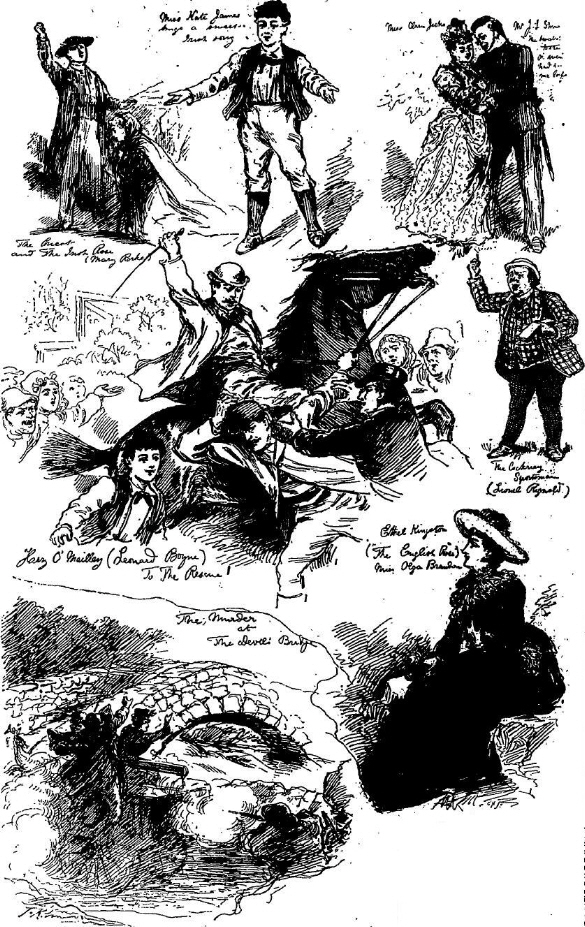 |
|
|
|
[Click the picture for a larger image.]
WHIRROO! A romantic new Irish play, as full of honest love-making, fun, noble self-sacrifice, humour, and natural sensation as “The Colleen Bawn” and “Arrah-na-Pogue,” was greeted with laughter, tears, and enthusiasm last Saturday night by an immense audience at the Adelphi Theatre, which Messrs. A. and S. Gatti, the enterprising Managers, have transformed into the coolest, brightest, and most comfortable Home of Melodrama. Mr. George R. Sims and Mr. Robert Buchanan are to be warmly thanked for having presented us with a thoroughly wholesome and most engrossing story in “The English Rose,” and with a fresh gallery of cleverly and clearly delineated characters, whose acquaintance London playgoers will certainly be pleased to renew again and again.
The melodious mélange of Irish airs in Mr. Henry Sprake’s capital overture at once prepares the mind for the picturesque peasantry, warm-hearted Squires, and witching Irish Lasses that abound in the powerful new Adelphi piece, albeit the play is called “The English Rose.” She needs to be a very fascinating “English Rose,” indeed—sweet, alluring, coy, and sparkling as a pretty English girl usually is—to sustain the fine part of “The English Rose,” as devised by the authors. For this “English Rose” blooming in Erin’s fair island—Ethel Kingston, the niece and ward of Sir Philip Kingston, an English landowner in Ireland—is set by the dramatists the task of overcoming (in so far as she herself is concerned) the aversion of a downfallen Irish family to English rule, and of winning the heart of Harry O’Mailley, as brave and gallant, as true and honest a Squireen as ever found delight in courting the “purty lasses” or winning a steeplechase. Truth to tell, Harry O’Mailley (enacted with consistent manliness, chivalry, and force by Mr. Leonard Boyne) loves his hunter, Taraneg, almost as well as he does the graceful and genial “English Rose”; and it chances he wins the human prize he has set his heart on gaining, and the steeplechase, in which he is matched against the designing villain, Captain Macdonell, wellnigh at one and the same time. This double victory occurs at a critical moment. Affairs have gone so badly with Captain Macdonell, Sir Philip Kingston’s agent, that he has been directed on the morrow to furnish Sir Philip with a balance-sheet of his accounts. This the agent finds so inconvenient to comply with that he does not scruple to persuade a devil-may-care ne’er-do-well, Randal O’Mara, who has a grudge against Sir Philip, to murder him; and Macdonell so manœuvres furthermore that the suspicion of having committed the murder shall fall upon his rival in love, Harry O’Mailley. It is one of the most exciting episodes where Harry O’Mailley, heartily cheered as he rides amid the crowd in his racing colours, leaping from the back of brave Taraneg, learns from little Patsie Blake that mischief is afloat, and that danger threatens Sir Philip at the Devil’s Bridge. Macdonell rushes in, and orders the arrest of Harry on a false charge of threatening to murder Sir Philip (who had insultingly forbidden his union with Ethel Kingston). But Harry O’Mailley is in the saddle in an instant, beats off his scoundrelly assailant with his whip, and gives one good lash at Taraneg, who gallops off at the top of his speed on the errand of mercy. Gallop as hard as he can, Harry is too late to save Sir Philip. Murderous Randal O’Mara, maddened by drink and the spirit of revenge, is at the Devil’s Bridge before him with his knot of “Moonlighters.” As the car drives up, Sir Philip is shot at. The Englishman springs to the ground, and discharges a revolver in the direction whence the shot came, but receives a bullet full in his chest from the rifle of Randal O’Mara. It is then that Harry O’Mailley rides up, jumps from his saddle in time to wrest the gun from the hands of the murderer, who seeks flight without being recognised. Confronted with the gun in his hand by Macdonell, Harry O’Mailley is staggered at being accused of the murder, and is smitten to the heart when his sweetheart herself, seeing the senseless body of her uncle, momentarily believes him to be guilty. Faith in his innocence is speedily restored so far as the “English Rose” is concerned. But his arrest follows. He is tried, found guilty, and sentenced to death; but is rescued by his faithful peasantry, and flies for sanctuary to his brother’s chapel, where this eventful history ends with the exculpation of the hero through the confession of the actual murderer. The family fortunes of Harry O'Mailley are at the same time restored by an American “windfall” his father brings from New York; and nothing remains for the long-suffering hero but to take “The English Rose” to his heart.
There are in “The English Rose” many eloquent dramatic situations unrecorded in the above brief report of the plot. Infinitely touching is the unrequited love of the sweet and pretty Irish rose, Bridget O’Mara (sustained by Miss Mary Rorke with the rare and exquisitely natural art, full of emotional sympathy, to which this admirable actress has long accustomed us), for Harry O’Mailley. One of the finest scenes on the English stage is that in which this winsome Irish lass chances to meet Harry’s brother, Father Michael O’Mailley, and learns the lesson of her own life in the parable he tremulously tells her—the parable of an Irish lad (himself) who loved with all his heart the sweetest of girls (herself), but loved in vain, and so became a priest that he might forget his own sorrow in alleviating the misery of those around him. Her acting in this impressive scene alone would stamp Miss Mary Rorke as one of the best actresses of our day, and her natural intensity deservedly won instant recognition on the part of the audience, although Mr. Thalberg, the young priest, did go in too much for the “reserved force” which is utterly unsuited to the Adelphi. I have never seen Mr. Leonard Boyne act so well and manfully as he did as Harry O’Mailley. Making love like an Irishman, riding like a Nimrod, full of zest and spirit, Leonard was himself again, and fully merited to share in the triumphs of the piece. Distressed by a bad cold, Miss Olga Brandon could not do justice to her natural abilities in the captivating part of Ethel Kingston on the first night, but is doubtless stronger and better by this time. Perhaps the most powerful bit of sympathetic acting yet forthcoming from Mr. J. D. Beveridge was his pathetic farewell to his sons and friends—a hearty farewell uttered by this able actor, the Knight of Ballyveney, with emotional force of the highest order, the knowledge being kept from him all the while that at that very moment his son is under arrest on the charge of murder. Mr. Charles Dalton, too, has enhanced his reputation by the incisive power of his acting as Randal O’Mara; and Mr. Bassett Roe and Mr. W. L. Abingdon sustained the parts of Sir Philip Kingston and Captain Macdonell with adequate ability. That remarkably clever and experienced young actress Miss Kate James, who charmed us all in “London Day by Day” and “The Green Bushes,” wins all hearts by her bright intelligence as Patsie Blake, who has to sing, and sings in a most dulcet manner, a catching Irish song, which will presently be whistled all over London. That popular humorous pair, Mr. J. L. Shine and Miss Clara Jecks, have never been more happily coupled than in “The English Rose”; the quaint love-making of Sergeant O’Reilly (who also sings, a rattling good song) and of “Louisha” rousing plenty of laughter. So with Mr. Lionel Rignold: he is vastly amusing as the Cockney sportsman, Nicodemus Dickenson, who finds Ireland too hot to hold him. It should be added that “The English Rose” has been mounted with habitual magnificence by Messrs. Gatti, is stage-managed to perfection by Mr. William Sidney, and is embellished with exceptionally beautiful scenery by Mr. Bruce Smith and Mr. W. Perkins—scenery as alluring, in fact, that the enchanting Irish tableaux should drive many holiday-makers to Ireland this autumn. In short, one and all concerned in the play, authors, actors, scenic artists, managers, and lessees, well deserved the storm of applause which greeted the triumphant production of “The English Rose,” destined to bloom for a very long time at the Adelphi, where it will be seen again and again with fresh interest and fresh pleasure.
___
The Graphic (9 August,1890)
THEATRES.
THE new romantic drama by Mr. George R. Sims and Mr. Robert Buchanan with which the ADELPHI has re-opened its doors, in defiance of the unfavourable influences of the seaside holiday season, is of the true Adelphi pattern. It is an Irish play with a story of the present time, wherein all those types of character which an Irish piece cannot safely dispense with are duly introduced and skilfully coloured to suit the tastes of the frequenters of that recognised home of robust melodrama. Need we say that The English Rose unfolds a tale of unjust accusation directed against a manly and high- minded hero, partly by the force of an extraordinary concurrence of fortuitous circumstances and partly through the wickedness of the villain of the piece. Need we add that the hero, Harry O’Mailley, represented by Mr. Leonard Boyne, is a dare-devil in the saddle, and a very prodigy of athleticism; that the heroine, played by Miss Olga Brandon, who was unfortunately suffering on Saturday from an infection of the throat, is a very model of tenderness and devotion; that the landlord’s agent, impersonated by Mr. Abingdon, is an unscrupulous ruffian; that Mr. Thalberg, as the priest, is full of charity and chivalrous sentiment; or that Miss Mary Rorke, as a much-tried and troubled maiden, appeals strongly to the feelings of those who can sympathise with beauty in distress. All the Adelphi company in fact find employment in the new piece, not forgetting Mr. Lionel Rignold, Mr. Shine, and Miss Clara Jecks as the comic personages, or Mr. Beveridge, Mr. Bassett Roe, Mr. Dalton, or that promising new recruit, Miss Essex Dane, in what are known as character parts. The steeplechase scene, wherein Mr. Boyne, mounted, as a cynical observer has said, upon “one of those cab horses who always win races on the stage,” performs many feats of what may be described as judicious equitation, gave manifest satisfaction to the first-night audience; though the scene was less startlingly picturesque than the moonlight murder of the unjust landlord, or the rescue of the gallant O’Mailley in the Court-house. The latter incident, it must be admitted, put no slight strain on the faith of the spectators, but nobody appeared to object to it on that account. The English Rose cannot be said to present any great originality, though there is an element of freshness in some of its scenes and character sketches; but it has on the other hand an abundance of the tried and approved conditions of popularity, and no doubt it will hold the Adelphi bill for many a month to come.
___
The Era (9 August, 1890 - p.14)
THE LONDON THEATRES.
_____
THE ADELPHI.
On Saturday, Aug. 2d, for the First Time,
a New and Original Drama, in Four Acts,
by George R. Sims and Robert Buchanan, entitled
“THE ENGLISH ROSE.”
Sir Philip Kingston ... ... Mr BASSETT ROE
The Knight of Ballyveeney ... Mr J. D. BEVERIDGE
Harry O’Mailley ... ... Mr LEONARD BOYNE
Father Michael O’Mailley ... Mr T. B. THALBERG
Captain Macdonell ... ... Mr W. L. ABINGDON
Nicodemus Dickenson ... Mr LIONEL RIGNOLD
Randal O’Mara ... ... Mr CHARLES DALTON
Sergeant O’Reilly ... ... Mr J. L. SHINE
Patsie Blake ... ... Miss KATE JAMES
Shaun ... ... Mr. W. NORTHCOTE
Larry McNulty ... ... Mr JAMES EAST
Cassidy ... ... Mr J. NORTHCOTE
O’Brien ... ... Mr. E. BANTOCK
Farmer Flannigan ... ... Mr H. COOPER
O’Shea ... ... Mr J. HOWE
Ethel Kingston ... ... Miss OLGA BRANDON
Bridget O’Mara ... ... Miss MARY RORKE
Louisa Ann Fergusson ... Miss CLARA JECKS
Judy ... ... Miss ESSEX DANE
Biddy ... ... Miss MADGE MILDREN
Norah ... ... Miss JANETTE REEVE
Mary ... ... Miss NELLIE CARTER
An “Adelphi drama” is not to be judged by the rules which are followed in estimating the merit of an ordinary work of art. It is a peculiar product, written for a particular class of playgoers. The question, in criticising Messrs Geo. R. Sims and Robert Buchanan’s new drama The English Rose, produced on Saturday last at the Adelphi Theatre, is not, does it represent a phase of real life? but, does it please the Adelphi playgoer? To judge by the lasting uproar of applause which came from all parts of the house, but especially from the profitable pit and the remunerative gallery, the authors of The English Rose have attained the object which they aimed at attaining; and there can be little doubt that another has been added to the long list of successful plays of which Mr Geo. R. Sims has shared the authorship. The Ireland of The English Rose is a stage-Ireland, the Hibernia of fantasy; the Ireland of fact is, indeed, ill-suited for theatrical purposes. Mr Boucicault once tried to utilise the Erin of contemporary truth; but the experiment was not successful, and that experienced playwright had to acknowledge his error and withdraw his piece. Messrs Sims and Buchanan have, wisely worked on the good old lines, and have produced a drama which, up to the end of the second act, is admirably effective, and whose last two divisions only require a little “pulling together” to make them as thoroughly terse and telling. The impoverished old Knight of Ballyveeney has two sons, Harry and Michael O’Mailley, and fine fellows both of them are. Harry is a fine young Irish gentleman; Michael is a priest. Sir Philip Kingston, the English capitalist who has bought the Ballyveeney property, and who, by grinding the faces of the tenantry, has made himself very unpopular, has a fair ward, Ethel, called, on account of her sweetness and beauty, “The English Rose.” She and Harry O’Mailley fall in love. But the course of their truthful affection is not to run smoothly. One Captain Macdonell, Sir Philip’s agent, and his willing instrument in rack renting and eviction, hates Harry, and plans his ruin. An officious sergeant of police named O’Reilly tries to injure Macdonell by writing an anonymous letter against him to Sir Philip; and of this epistle the baronet believes Harry to be the sender. Harry further enrages Macdonell by winning a steeplechase in which the Captain is an unlucky competitor. Nicodemus Dickenson, Sir Philip’s servant, an ex-welsher and forger, is under the thumb of Macdonell, who instigates a desperate and intemperate tenant, one Randal O’Mara, to waylay Sir Philip in his gig, and murder him. Dickenson is induced to drive past the place of ambush, a romantic glen. In a quarrel which occurs between Harry and the baronet, the former threatens Sir Philip in the hearing of Macdonell, who hurries away, and lays an information against young O’Mailley. Patsie Blake, a boy who divides the duties of “deus ex” of the piece with Sergeant O’Reilly, overhears the scoundrels arranging for the attack on Sir Philip, and informs Harry. The latter is about to start for the spot where the assassination is to take place, when he is stopped by Macdonell, who comes with the police to take him into custody; but O’Mailley leaps on the back of the good steeplechaser “Tear-an’-ages,” beats off Macdonell, and makes his escape. And here let us stop to say that we have rarely seen a “horsey” effect done better on the boards. By the immaculate appearance of “Tear-an’-ages” after the race, the “finish” would appear to have been a very tame affair; but the realistic way in which Harry’s exit is managed is, considering the risk from accidents in case of the horse being “imperfectly rehearsed,” highly spirited and creditable. Sir Philip gets to the “Devil’s Bridge;” the gang of scoundrels, headed by Randal O’Mara, fire upon and kill him; and Ethel, recovering from a swoon, and seeing Harry with the gun which O’Mara has left behind him, at first suspects her lover of being her guardian’s murderer. She soon, however, realises Harry’s innocence, and avows her intention of standing by him to the last. He bears her to O’Mara’s house, and. finding that the Knight of Ballyveeney is just starting for America to see about some property that has been left to him, Harry conceals the truth from the old gentleman, bids him farewell, and then allows himself to be taken to prison. Two months elapse, and Harry is tried for the murder of Sir Philip, and found guilty. In spite of his earnestly expressed wishes, he is rescued by the mob from the police, and seeks shelter in his brother Michael’s chapel. Michael has learned from O’Mara, under the seal of the confession, that the latter was the murderer; but, in spite of terrible temptation, remains true to his clerical oath. But there were “too many in the job” for the criminal to escape justice. O’Reilly’s sweetheart, Louisa Ann Ferguson, puts the Sergeant on the track of Dickenson, who is “wanted” for forgery; and, to save himself, the rascal informs on Macdonell. Patsie Blake, who has hitherto been afraid to speak out freely, assists in the discovery of the truth; and O’Mara, tortured by remorse, and vigorously taxed with his guilt by Ethel, confesses his crime, and goes out to die. Harry’s innocence is proved, and he is left to enjoy life in company with the “English Rose.”
Rarely has a cast contained so many good and well-balanced characters. Mr Bassett Roe as Sir Philip Kingston hit off the cynical and disagreeable peculiarities of the “hard landlord” cleverly and well. Mr J. D. Beveridge gave proof of the fact that the “reformed villain” makes the best benevolent elderly Irishman by his genial and generous treatment of the rôle of the Knight of Ballyveeney. Mr Leonard Boyne not only sprang to—and from—the saddle like a bold horseman, but enacted Harry O’Mailley with spirit, sturdiness, and sensibility. Seldom has Mr Boyne acted with more energy, breadth, and straightforwardness. His manner was entirely free from affectation, and he displayed the insinuating eloquence of the young Irishman as admirably as he developed the earnestness, depth, and truth of the more serious side of the character. Mr T. B. Thalberg’s parish priest was admirably easy and refined. Mr W. L. Abingdon’s Captain Macdonell was a clever variation on this accomplished actor’s previous depiction of stage villainy; and as Nicodemus Dickenson Mr Lionel Rignold, capitally and comically made-up, played with rare humour and originality. Mr Rignold’s representation of the vulgar, oily, and servile scamp was thoroughly graphic, and he contributed to the cast a character sketch of real and remarkable value. Mr Charles Dalton’s Randal O’Mara was powerfully picturesque; and Mr J. L. Shine had a part of the kind in which he is seen at his best in that of Sergeant O’Reilly. Miss Kate James was so smart and vivacious as Patsie Blake that it almost seemed a pity that the authors had not given her more to do; and Miss Olga Brandon as Ethel Kingston displayed a great amount of vigour and intensity, and won the sympathy, admiration, and applause of the audience. Miss Brandon, though suffering slightly from hoarseness, triumphed over her temporary disadvantage by the deep emotional feeling which she infused into her delivery of her lines, and by the fine womanly sensibility with which she endowed the whole of a very talented performance. Miss Mary Rorke, with the slightly redundant rôle of Bridget O’Mara, did all that was possible; and Miss Clara Jecks was, as usual, delightfully crisp and quaint as Louisa Ann Ferguson. Minor parts were well sustained by Mr James East, Mr H. Cooper, and others; and the crowds were well drilled. The scenery was charmingly picturesque, Mr Bruce Smith’s moonlit view of the Devil’s Bridge and his “Chapel by the Sea,” with Clew Bay in the distance, being admirably effective in different styles. The English Rose was received with one of those long-lasting storms of thunderous applause which are rarely heard within the walls of a theatre. The artists, the authors, and that able stage-manager, Mr William Sidney, were called before the curtain with tremendous effusion. If the reception of Messrs Sims and Buchanan’s drama on Saturday can be taken as a criterion, The English Rose is destined to bloom for many hundred nights at the Adelphi Theatre.
___
The Illustrated London News (9 August, 1890 - p.6)
THE PLAYHOUSES
Thanks to Mr. George R. Sims and Mr. Robert Buchanan, the Adelphi Theatre is now in full swing with an honestly exciting drama that will delight the country cousins during the summer holidays, and will be ready to amuse the playgoing Londoner when the leaves are beginning to fall, and it becomes chill o’ nights. The Messrs. Gatti are wise in their generation. When they announced “The English Rose” as to be produced on Aug. 2, people who had not studied the question held up their hands in astonishment. What? produce a new play in August, when London is empty! What madness! The fall, as the Americans call it, is the time for new plays in London. Quite so, and very possibly in regard to most theatres and most plays. It would not do to start in August a new play theory by Ibsen or Tolstoi. This is not the time to experiment with a Théâtre Libre. If it be true that Robert Louis Stevenson and Mr. W. E. Henley and Mr. George Moore have plays in their portfolios destined to astonish the world, and to prove in their own clever and eccentric way that human nature is not at all what it is supposed to be, and that we are all to correct our old-fashioned ideas by new-fangled philosophy—well, it would not be advisable to take any theatre, even at a gift, in August for the purpose. It would indeed be madness to advertise “Ghosts” or a version of the “Kreutzer Sonata” just now, even if Mr. Beerbohm Tree offered his theatre free, gratis, for nothing. But practical men like Dion Boucicault and John Hollingshead have proved before now that London is never empty. When we are all running down into the country, the residents in green meadows are coming up to town. They exchange their vicarages and farmhouses for villas in Bayswater and Brixton; and, if it be true that London is never empty, it is equally true that London visitors want to be amused. They must be classed among the old-fashioned, these country cousins of ours. They are not very advanced. They do not sneer at romantic plays. They will not consider that the characters in “The English Rose” are unduly impossible; and, if I am not mistaken, they will crowd to the Adelphi while the new Irish drama is running.
The play is old and yet new. We, who are experienced in such matters, know by heart the young athletic hero who is engaged to a lovely girl without the consent of her parents or guardians. Sometimes it is a father, sometimes a brother, sometimes an old hunks of a guardian or uncle who forbids the banns. The hero is a prodigy of valour, the heroine a model of self-abnegation. Just as the atmosphere of love looks the most uncanny, when the matrimonial clouds are darkening, the splendid young hero is sure to turn up just when a diabolical murder has been committed. He is caught red-handed. He is sure at some time or other to have vowed vengeance against the murdered man. Appearances, to say the least of it, are very much against him, and he is hurried off to justice. He is very often condemned to death, and only escapes by the death-bed confession of the real murderer. All this we know by heart, and without this “situation” an Adelphi drama could scarcely exist. Well! Mr. Sims and Mr. Buchanan have not disdained the old formula, but they have added to it and embellished it. To the fancy of “The Colleen Bawn” and “Arrah-na-Pogue” they have added the excitement of “The Flying Scud.” An Irish man—if he be worthy of the name—is born a lover of horses, so it is very easy to introduce a real horse in an old-fashioned Irish play. As luck will have it, Mr. Leonard Boyne is an accomplished horseman, so the audience is allowed to indulge in at least five minutes of astonishment, not to say danger. In the course of the play the hero hears that a murder is to be committed at a lonely spot in Connemara, and the danger can only be averted by galloping off at full speed on the back of a hunter that has just won an exciting steeplechase. Mazeppa and Dick Turpin are not in it with this Adelphi sensation. First of all, the villains and moonlighters try to stop Mr. Leonard Boyne in his mad career. But he leaps into the saddle, lashes away the obstructionists who cling to his horse’s bridle, and gallops off at a furious pace amid the cheers of the excited spectators. This is one fine scene, and would have been enough in the old days to have made the fortune of any Adelphi melodrama. But there are many more! One of the prettiest scenes in the play is where the hero’s old father, on the eve of sailing for America, is kept in the dark as to the arrest of his favourite son on the charge of murder. In fact, Harry O’Mailley has only just been arrested when his old father enters to take farewell of his family. By the kindness of the Sergeant of Constabulary, the truth is not told, so that the accused criminal and his family have to feign merriment, while in truth their hearts are breaking. This clever scene is “led,” as it were, with admirable tact and discretion by that excellent actor Mr. J. D. Beveridge, and, although it did not go on the first night as well as it might have done, still it will be one of the most interesting and poignant episodes in the new play. Besides all this, there is the spirited rescue of the innocent man by the Irish peasants while he is leaving the court, guarded by the military; and a very touching and dramatic scene, where a priest who has ascertained the real murderer, “under the seal of confession,” refuses to break his oath, although by his religious honour he condemns his own brother to a felon’s death.
But of what value would an Irish drama be, however strong and dramatic, if it did not contain dialogue witty, terse, bright, and cynical? Mr. Sims—for surely it must be Mr. Sims—is at his best in this play. The character of the Irish Sergeant of Constabulary belongs essentially to Mr. J. L. Shine; the little lame Irish peasant, so pathetically rendered by Miss Kate James; the wild, vindictive moonlighter, played with such welcome strength and intelligence by Mr. Dalton; and the dear old Irish ruined gentleman, personated with such fervour and charm by Mr. J. D. Beveridge, are all characters of which Dion Boucicault might be proud. They are sketched with a master’s hand—graphically, truthfully, and effectively. And then, of course, there is the Cockney swindler, played with such humour by Mr. Lionel Rignold—a character that Boucicault could not have touched. It belongs to the Sims gallery, and could not have occurred elsewhere. The amusing scoundrel stepped on to the stage from Southwark or St. Giles. He is drawn to the very life.
I am inclined yo think for once in a way—it very seldom happens—the new Irish drama had been over-rehearsed. At any rate, many of the artists on the first night were dreadfully tired, and bore the signs of “over-training.” Miss Olga Brandon was almost speechless, and she played the heroine with extreme difficulty. Mr. Leonard Boyne’s voice was almost gone, but he battled bravely against the physical difficulty and consequent depression and loss of voice. Mr. Thalberg seemed to lose heart just when it was wanted most; and all through we all noticed a sense of fatigue that dragged some of the best scenes. Mr. Boyne was one of the few who suffered and still succeeded. Had he let the play down as some of his companions did, the result might have been very different. As it was, he has not acted better or met with a more congenial part for many years. The defects are, I am convinced, only temporary. Miss Olga Brandon will soon gain strength and learn the pitch of the Adelphi, though unfortunately the delicacy of her acting is lost on this stage and in this kind of play. Miss Mary Rorke will become reconciled to a not very grateful part; and possible Mr. Thalberg will make the Irish priest a little less lackadaisical. It is a splendid character to play, but Mr. Thalberg’s Father Michael is not an Irishman as he ought to be. He has been crossed in love, it is true; but he has conquered all that, and become a man. Mr. Thalberg should be a little more manly, and not so sentimental. It is a pity, because the young actor is concerned in some of the best scenes in the play. Of the success of “The English Rose” there can, however, be no question. There is room in London for plays of every shape and pattern, and it does not follow that, because just now there is a dead set against the conventional in dramatic art, we should discard the poetical and the romantic. Rome was not built in a day, and we shall not arrive at the conclusions of the radicals and reformers without a struggle. Besides, I would whisper just this in the ears of the professor of the new school of topsy-turvyists. There are some, no doubt, who conscientiously consider that the Harry O’Mailleys and English Roses, and peasants and priests, of old-world melodrama are dreadfully unnatural. But there are some also who as conscientiously believe that the men and women pictured by the new school of pessimistic philosophers are not only absurd, but prigs into the bargain. Better the heroes of old-world romantic dramas then the nauseous prigs—whether men or women—who prate to us of their theories and convictions in the fin de siècle drama. We shall not arrive at that yet awhile; so meanwhile, let us go to the Adelphi and applaud pluck, courage, self-sacrifice, and good horsemanship.
— C. S.
___
The Illustrated Sporting and Dramatic News (9 August, 1890 - p.13)
DRAMA.
ADELPHI THEATRE.
BOTH Mr. G. R. Sims, the lyrical humourist of cockneydom, and Mr. Robert Buchanan, the poet turned playwright, have now won assured positions in dramatic authorship, and each, it may be added, has plenty of confidence in himself and his work. But neither would be slow to admit that in the manufacture of that conventional concoction, the Irish drama of the English stage, he has much to learn from that past master of the craft, Mr. Dion Boucicault. The direct lineal descent of The English Rose from such plays as Arrah na Pogue, The Shaughraun, and The Colleen Bawn is obvious and easily traced; but the new piece is none the worse for that—rather is it the better, since it necessarily comes of a sound stock and starts with an assured popularity. But, though The English Rose is certainly the most vigorous, most genial, and most effective production of its class that has been given to Adelphi Playgoers for years, we may be permitted to doubt whether the English and Scotch collaborators have quite caught the true Hibernian flavour and colouring at which they aim. There is more than a suspicion of artifice about their imitation, clever though it undeniably is, and their showy story and characters are not always quite convincing. Partly perhaps this is because the dramatists have so deliberately brought their romance up to the date of modern reality—of threatening letters, moonlight outrages, evicted tenants—have substituted the Irish Constabulary for the British Army, have abolished the old fashioned Irish priest, and have introduced to the wilds of Connemara the Whitechapel drolleries of the suburban betting ring. It need not be feared, however, that because Messrs. Sims and Buchanan have made these minor innovations they have thrown overboard the accepted scheme of Irish romance as illustrated on the London boards. On the contrary the main plot of The English Rose is absolutely orthodox in the arrangement of its counterpoise between the rival nationalities, between virtue and vice, between reckless chivalry and cowardly malice. If it is a wealthy Englishman, Sir Philip Kingston who by the power of his accursed gold has ousted the Knight of Ballyveeney from his lands and castle, it is the Englishman’s beautiful niece Ethel whose bright smiles encourage the old knight’s gallant son, Harry O’Mailley. If it is the British landlord’s rascally agent, Captain Macdonell, who, to suit his private ends, stirs up the passions of the finest peasantry in the world, it is a drink-sodden Celt, Randal O’Mara, who commits the crime of which the hero is falsely accused. The balance of interest is thus kept even in the most orthodox manner, if without the display of any marked invention on the part of the authors. The experienced playgoer who has heard high words—instigated by the jealous Macdonell—between the haughty Sir Philip and the impecunious suitor for his niece’s hand, knows only too well that young O’Mailley’s hot-blooded indignation will be brought up in evidence against him when the inevitable agrarian murder is committed by someone else. He is not even surprised when O’Mailley, galloping in generous haste to save his insulting enemy from treacherous attack, arrives just in time to be accused of the bloody deed by the double-dyed traitor to whose scheming it is directly due. It seems the most natural thing in the world—the stage-world, that is to say—that the officer charged with a warrant for O’Mailley’s arrest should delay putting it in force in order that the young man’s father, who is bidding him farewell before sailing to claim a fortune in America, shall know nothing of the shame and danger in which his son is left. Nor ought one, perhaps, to feel astonished even at the ease with which the peasant populace rescues its hero from the cordon of soldiers and police conveying him from the assize-court to the prison. “Thrice is he armed who hath his quarrel just”; and inasmuch as the prisoner is undoubtedly innocent, the power of his armed escort is of course nothing beside that of the rustic mob, before whose sticks and shouts the military and constabulary alike fall down like ninepins. Whether the moral of such an exhibition is altogether a useful one in the interests of law-abiding society is, of course, another question, but it must at any rate be said that, much to the distress of his disorderly but loyal friends, O’Mailley is always ready at the critical moment to give himself up to the cowardly minions of the law. His English sweetheart, who cannot deny that he was found close to the body of her dying uncle, does not help him much by clinging round his neck at odd moments, and she has little else than this to do. But his brother, a priest who bears himself like a fair young curate of Ritualistic tendencies, could save him if he could make up his mind to reveal a secret confided to him—not in the confessional, but in his sacerdotal capacity—by the real murderer. Father Michael, however, remains deaf alike to the promptings of fraternal affection and of an agonised sweetheart; so the requisite confession has to be forced by more or less likely means out of the guilty man. In the meanwhile, an accomplice, aware of Captain Macdonell’s share in instigating the moonlighters—who are, it seems, merely the puppets of unscrupulous land-agents—turns Queen’s evidence, so that just as the curtain falls the handcuffs are put on the right wrists; whilst the condemned innocent, who has already escaped from jail and taken refuge in his brother’s chapel on the seashore, does not await even the formality of Her Majesty’s pardon to become a free man, dowered by the love of his Saxon sweetheart and by the wealth acquired by his father in the course of a trip to America.
But if there is nothing very fresh or very ingenious about the tale of the lovers of Ballyveeney, the murder, the rescue, and the confession, there is much that is spirited about the action, the delineation of familiar character, and the blending of humour and pathos. Nothing better in its way has for a long time been done than Mr. Leonard Boyne’s exit on horseback at the end of the first scene of the second act—an episode which shows O’Mailley’s representative to have equestrian as well as histrionic skill. The moonlight attack upon the landlord’s car, too, is capitally illustrated; whilst the farewell of the old knight and the scene of the rescue afford dramatic opportunities which will doubtless be employed hereafter to fuller advantage than was the case on Saturday night. Mr. Leonard Boyne plays excellently throughout, for a part like that of the hero here is one in which his very defects as an actor become virtues. Mr. Beveridge gives the ring of manly pathos to the speeches of the Knight of Ballyveeney, but Mr. Thalberg is altogether too sentimental for good Father Michael, and Miss Olga Brandon gives far less vitality to the woes of Ethel Kingston than she did to the unwilling hypocrisy of Vashta Dethic. Miss Mary Rorke does what she can to explain the rather vague raison d’être of Ethel’s mournful rival Bridget O’Mara, and Miss Kate James will doubtless soon put a little more individuality into her pleasant sketch of the lad Patsie Blake. The truculent villainy of Mr. Abingdon’s Macdonell and the proud dignity of Mr. Bassett Roe’s Sir Philip are all that could be desired, whilst still stronger dramatic work is done by the resolute Randal O’Mara of Mr. C. Dalton. Mr. Shine and Miss Jecks, a sergeant O’Reilly and his London lady-love, repeat their passages of comic courtship after a fashion which has evidently lost none of its favour here; but the comic hit of the performance is that scored by Mr. Lionel Rignold in the flowery speech and slangy metaphors of Nicodemus Dickenson, informer, ex-bookmaker, car-driver, and genial ruffian generally. The scenery and the sensational effects are admirably contrived; the few faults of slow or spiritless interpretation are doubtless by this time all remedied, and there is every reason to believe that in The English Rose Messrs. Gatti, with the aid of Messrs. Sims and Buchanan, have achieved a typical Adelphi success.
|
|
|
|
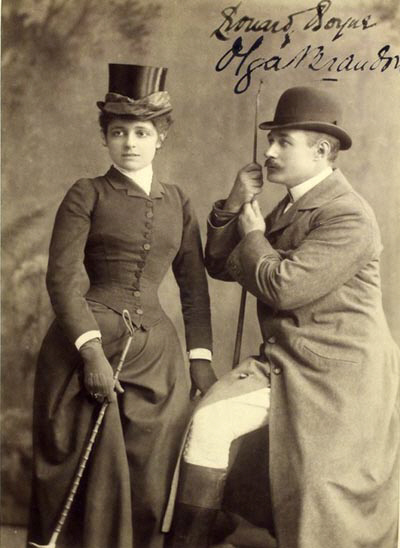 |
|